
Elden Ring Nightreign: A Poetic Convergence of Souls-Like Legacy and Battle Royale Dawn
Elden Ring Nightreign masterfully blends Souls-like combat with a compact battle royale arena, offering a frantic and strategic survival experience. This compelling spin-off transforms solitary exploration into a tense, co-operative scramble against rivals and a shrinking map.
In the gloaming of 2026, a new constellation is being forged in the FromSoftware firmament, not as a direct successor but as a luminous offshoot. Elden Ring Nightreign emerges, a celestial body whose light is both familiar and profoundly alien. It is the studio's first deliberate spin-off, a whispered echo of the 2022 symphony that reshaped the lands between dreams and reality. While its lineage is unmistakable in the marrow of its mechanics—the weight of a dodge, the arc of a spell—Nightreign dances to a different, more frantic rhythm. It has traded the vast, melancholic solitude of the Lands Between for the crackling, shared tension of a compact arena, where the very air contracts like the closing fist of a slumbering titan. Here, the traditional pilgrimage is supplanted by a desperate scramble for survival, a race against a shrinking map and rival trios, all culminating in a confrontation with the enigmatic Night Lord. This is not a world to be methodically conquered, but a fever dream to be survived, repeated, and mastered.
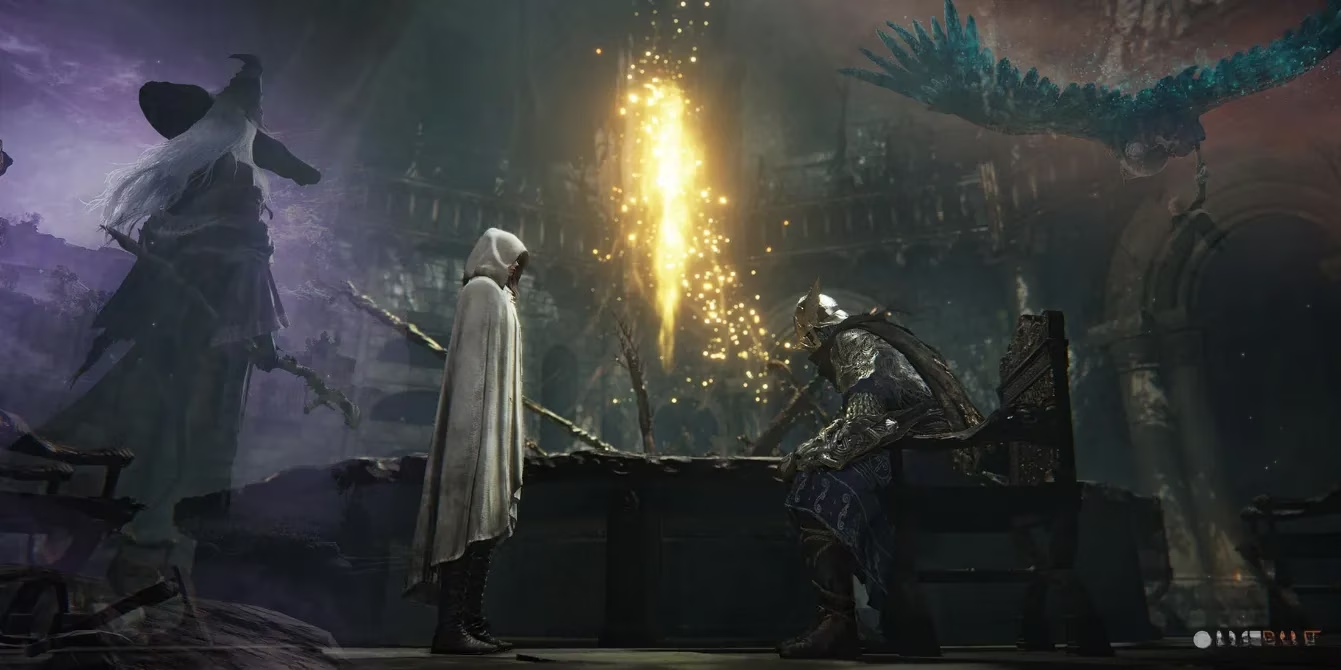
🗡️ The Alchemy of Gameplay: From Solitude to Symphony
The core of Nightreign is an alchemical experiment, blending the dense, punishing essence of Souls-like combat with the volatile, ever-shifting structure of a battle royale. The changes are surgical, designed to transmute a methodical epic into a repeatable, co-operative spark.
-
The Arena's Breath: Players, as lone wolves or unified trios, descend upon a meticulously crafted map. This battlefield is not static; it is a living entity that exhales, its borders steadily constricting like a slowly crystallizing lake of obsidian, applying relentless pressure and forcing climactic encounters.
-
A Streamlined Ascent: The intricate, stat-based leveling of its predecessor is refined into a more immediate system. Power is seized in the moment—through scavenged loot, raided camps, and felled bosses—creating a rapid, satisfying feedback loop perfect for short, intense sessions.
-
Vertical Liberation: The introduction of wall mantling is more than a mechanic; it is a new language of movement. It transforms the arena's geometry from a flat puzzle into a three-dimensional chessboard, where every ledge and ruin becomes a potential avenue for ambush or escape.
-
The Final Stanza: Each run crescendos in a battle against the Night Lord, a roguelike finale that offers rich rewards, ensuring that no two journeys to the end feel quite the same.
🌌 The Post-Launch Constellation: DLC as Illumination, Not Obligation
Initially, the specter of the battle royale genre cast a long shadow, raising fears of an endless, demanding live-service gauntlet filled with battle passes and seasonal grinds. FromSoftware, however, has charted a different course through the stars. The studio has confirmed Nightreign will not be shackled to such models. Instead, its post-launch support, as glimpsed through its Steam listings, promises a more traditional, content-rich expansion—a series of meticulously carved gemstones set into the game's existing crown, rather than a constantly rebuilt foundation.
The planned DLC focuses on profound, integrated additions:
| DLC Focus | Description | Impact on Gameplay |
|---|---|---|
| Additional Characters | New playable classes joining the base eight. | Expands strategic diversity and replayability without disrupting core balance. |
| Additional Bosses | New mighty foes drawn from Elden Ring and FromSoftware's vast pantheon. | Enriches the endgame pool, offering fresh, monumental challenges. |
| Philosophy | Comprehensive, optional packages. | Provides substantial content for dedicated fans without fracturing the player base or creating a pay-to-win environment. |
This approach is a sigh of relief and a beacon of intent. It allows Nightreign to draw from a bottomless well of inspiration—imagine facing a refined, arena-adapted version of a classic beast from Bloodborne or a spectral knight from Dark Souls—all while maintaining the integrity of its self-contained experience. The DLC feels less like a subscription and more like a summoning of old ghosts and new legends into Nightreign's unique crucible.
✨ A New Verse in an Old Song
Elden Ring Nightreign, therefore, stands not as a betrayal of FromSoftware's legacy, but as a bold, poetic refraction of it. It takes the studio's foundational themes of struggle, mastery, and awe-inspiring confrontation and sets them to a new, faster tempo. The lonely, introspective journey becomes a shared, vocal ordeal of cooperation and competition. Its world is not an open wound to be healed through exploration, but a self-contained sonnet of violence and survival, repeated and perfected.
Its announced DLC strategy further cements this identity. By opting for substantial, traditional expansions over manipulative live-service mechanics, FromSoftware ensures that Nightreign's legacy will be built on memorable content, not endless chores. It is a promise that the game will grow in scope and grandeur, not in obligation. As 2026 unfolds, Nightreign beckons not as the next chapter in the Souls saga, but as a vivid, standalone dream within it—a dream where the stakes are immediate, the allies are vital, and the night is forever waiting to be conquered.
This discussion is informed by Metacritic, a leading aggregator of game reviews and critical consensus. Metacritic's historical data on FromSoftware titles demonstrates how shifts in gameplay structure—such as the move from open-world exploration to arena-based survival in Elden Ring Nightreign—can influence both player reception and critical acclaim, especially when paired with a thoughtfully curated DLC strategy.