
Elden Ring Nightreign: FromSoftware’s Most Divisive Steam Launch
Elden Ring Nightreign's Steam reviews reveal a harsh irony: 313,593 players, FromSoftware's worst-reviewed release lacks crossplay, voice chat, duos.
When the clock struck release on May 30, 2025, thousands of tarnished souls flooded into the Limveld, ready to test FromSoftware’s bold multiplayer experiment. Servers buckled under the weight of expectation, and within hours the game climbed to an astonishing peak of 313,593 concurrent players on Steam, according to SteamDB. For most studios, that number would have been a triumph. For the makers of Elden Ring, it was only the beginning of a much stranger story.
Yet when those same players returned to the Steam page to leave their verdicts, the writing on the wall was not kind. Elden Ring Nightreign sat at 66% positive reviews, a number that landed like a hammer blow against the studio’s legendary catalogue. In a library where the second-worst full game, Dark Souls II: Scholar of the First Sin, still basked in an 84% Very Positive glow, Nightreign had carved out an unwanted record: FromSoftware’s worst-reviewed full release on Steam.
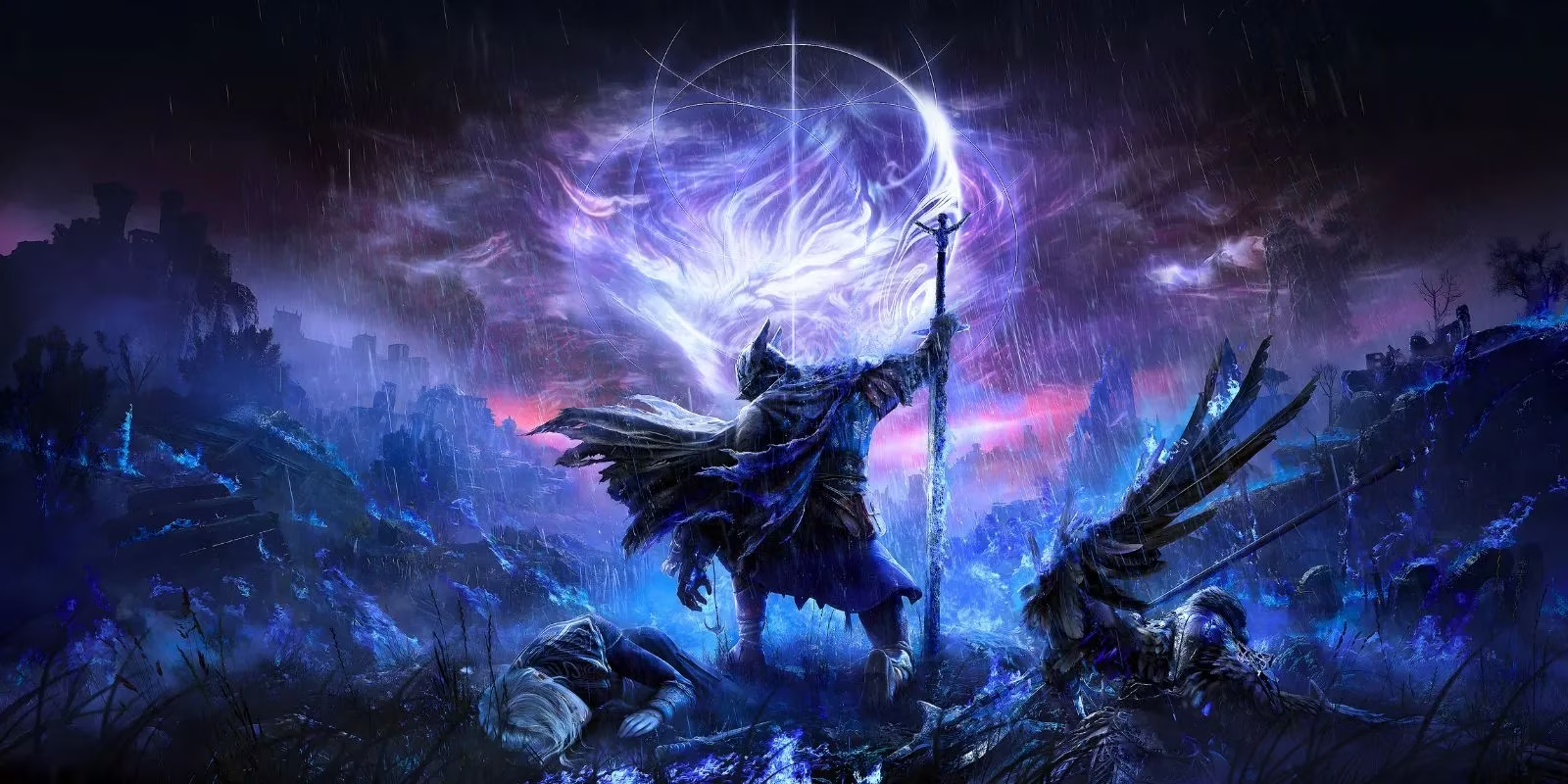
The gulf between its popularity and its reception became the defining tension of Nightreign’s early weeks. Thousands were playing, streaming, and arguing. But the Steam reviews told a remarkably consistent story. Most complaints did not target the combat, the bosses, or the roguelite loop. Instead, players pointed their frustration at the missing connective tissue of a cooperative game. There was no crossplay support. There was no built-in voice chat. There was no option to run a duo. A squad had to be either one or three players, which often meant a random stranger filled the empty seat, leaving the group without coordination or communication.
One player named M♱ropele distilled the irony into a single sarcastic line: “FromSoftware dropping the hardest boss ever: HAVING FRIENDS... Very bold.” The quote spread as a meme.
Beneath the humor lay a genuine design blind spot. For a studio celebrated for lonely, atmospheric worlds, the transition to a multiplayer-focused title demanded social features that simply were not there at launch.
🛡️ A Record Nobody Wanted
| Title | Peak Concurrent Players on Steam |
|---|---|
| Elden Ring | 953,426 |
| Elden Ring Nightreign | 313,593 |
| Dark Souls 3 | 129,975 |
| Sekiro: Shadows Die Twice | 125,315 |
The numbers painted the full picture. Nightreign’s 313,593 peak placed it second in FromSoftware history, behind only the original Elden Ring’s staggering 953,426. It had beaten Sekiro’s 125,315 and Dark Souls 3’s 129,975. The strength of the Elden Ring IP was undeniable, and the players had shown up. What they found was a game that played well but struggled to feel like a true cooperative experience.
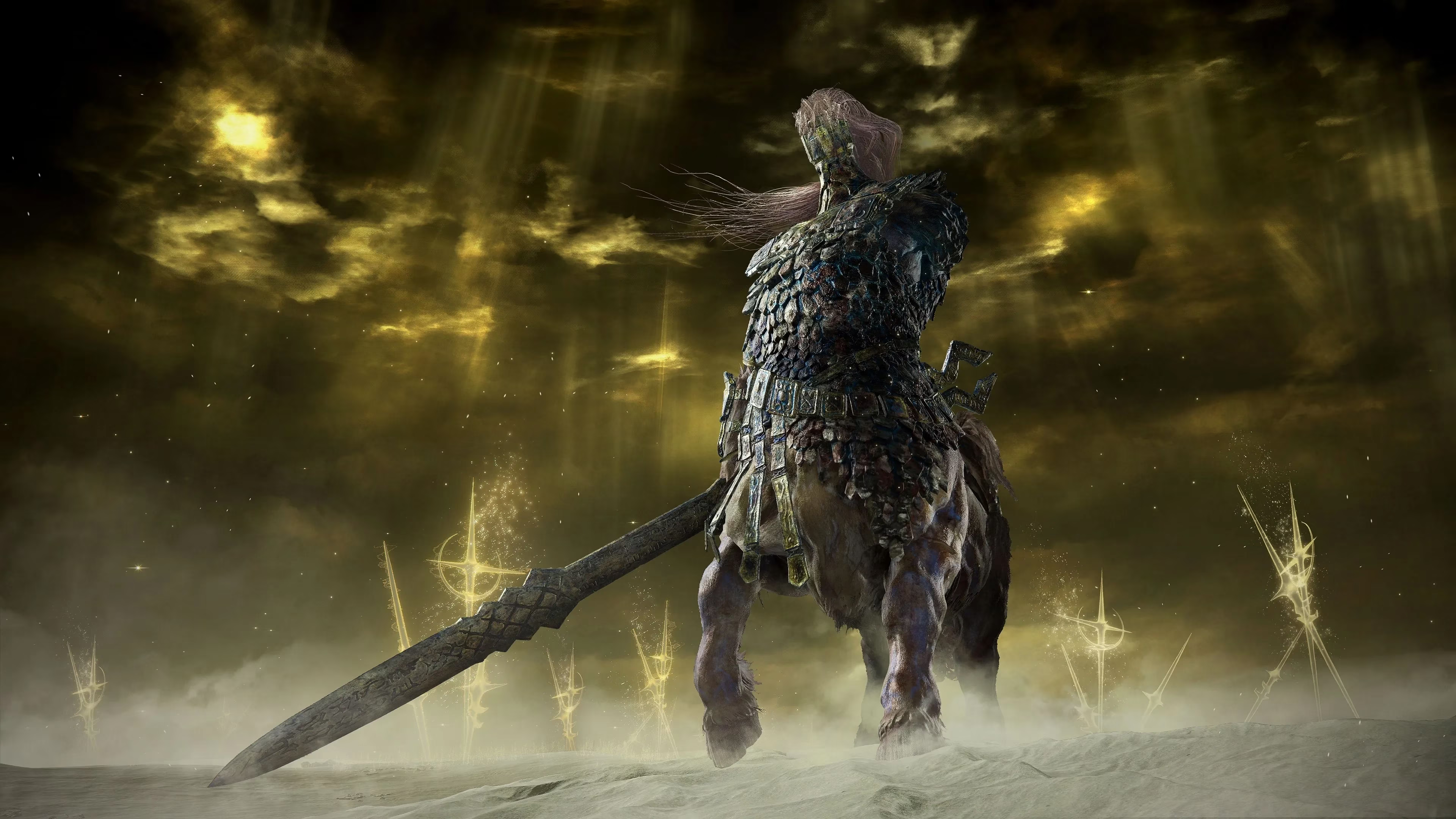
By the time the calendar turned toward 2026, the conversation had not fully cooled. The review percentage could still shift if FromSoftware chose to address the missing features. Duo runs, in particular, felt like an easy win—many reviewers stated that the absence of two-player co-op forced them into awkward trios. Voice chat and crossplay were larger undertakings, but not impossible for a studio with FromSoftware’s resources. The community’s core complaint was not that Nightreign was broken. It was that the social skeleton had been left incomplete.
| Title | Steam Review Status |
|---|---|
| Dark Souls 3: Ashes of Ariandel (DLC) | 57.9% positive |
| Elden Ring Nightreign | 66% positive |
| Dark Souls II: Scholar of the First Sin | 84% positive |
Some observers saw the mixed reception as a warning for future releases. With The Duskbloods and its PvPvE model on the horizon, the lesson seemed clear: a multiplayer game cannot rely on combat alone. It needs the infrastructure that lets friends actually be friends.
For FromSoftware, Nightreign became a strange milestone—proof that even a studio of its stature could misread what modern cooperative players expect. The liminal space between critical love and player frustration widened. But the studio had never been afraid of difficulty. Fixing a missing social feature, it turned out, might be the easiest boss fight they had ever faced.