
Elden Ring's Age of Stars Mistranslation Almost Ruined Ranni's True Intentions
Elden Ring's Age of Stars ending reveals Ranni's true motives, with mistranslation reshaping fan debates on her questline.
Four years after Elden Ring first dropped, I'm still getting into arguments about Ranni's Age of Stars ending. I used to read the English text and feel like I was making a deal with a cosmic ice queen who wanted to wipe out feeling itself. It left me cold—literally. 😅 But after digging into fan translations and revisiting the original Japanese dialogue, I've had to eat my words. The official English version doesn't just lose nuance; it flips the meaning of Ranni's entire questline on its head.
Quick heads-up: massive spoilers for Elden Ring's final act follow.
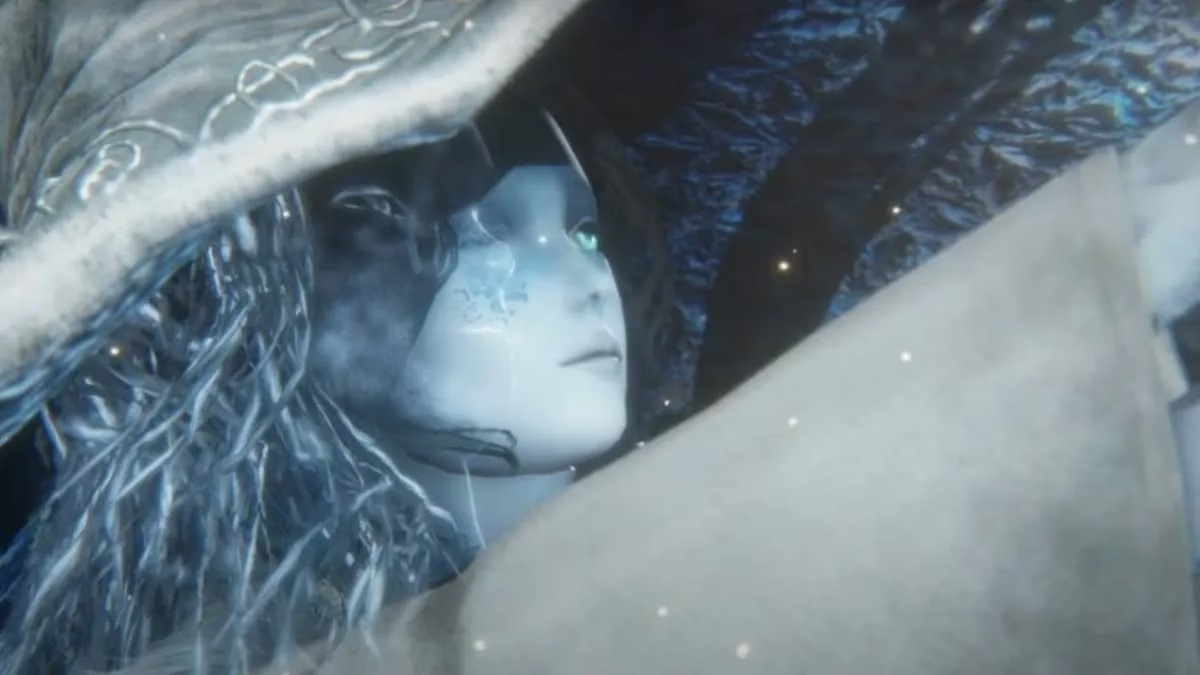
To understand why the mistranslation matters so much, you have to know where Ranni's coming from. She was an Empyrean—a demigod with a direct line to godhood—but she never wanted the throne or the Golden Order pulling her strings. Under the mentorship of the Snow Witch Renna and her own mother, Rennala, Ranni grew to worship the moon rather than the Erdtree. Her big ambition, even in the official translation, is to replace the Erdtree's influence with the moon and shoo the Greater Will out of the Lands Between. That part is clear enough. The problem is the language she uses around "chill nights" and the "laws of the moon." Hidetaka Miyazaki's script is famously elliptical, and Ranni's archaic phrasing only makes it worse.
When I first beat Radagon and the Elden Beast, I heard Ranni say: "Now cometh the age of the stars. A thousand-year voyage under the wisdom of the Moon. Here beginneth the chill night that encompasses all, reaching the great beyond. Into fear, doubt, and loneliness… As the path stretcheth into darkness." That speech hit me like a bucket of ice water. It sounded like she was locking the world in a freezer for a millennium. I remember thinking, "Well, at least it's not the Frenzied Flame."
But the English version doubles down before the final battle. Ranni says life, souls, and order are bound tightly together, and she wants them at a great remove. Then she adds that the "certainties of sight, emotion, faith, and touch" would all become impossibilities. Read that without context, and you'd swear she wants to tear apart what it means to be a person. It made the Age of Stars feel like a lonely, almost nihilistic ending. Not evil, exactly, but not exactly a win for the common Tarnished either.
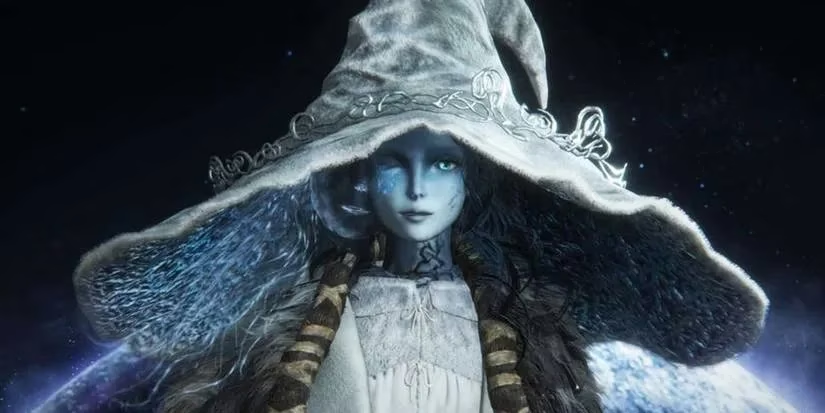
Then I read a more literal translation of the original Japanese dialogue, and my jaw dropped. The difference is night and day. In Japanese, Ranni doesn't say she wants to plunge everyone into a chill night—she says the chill night should be kept infinitely far away. Her goal isn't to remove sight, emotion, faith, and touch from people, but to remove the order itself from being directly visible, tangible, and controlling. Frontline Gaming Japan's translation puts it like this: "Even if life and souls are one with the order, it could be kept far away. If it was not possible to clearly see, feel, believe in, or touch the order… That would be better."
That's a whole different story. The English text makes Ranni sound like she wants to separate souls from bodies and emotions from minds. The Japanese text says she wants to separate the Greater Will's order from everyday life. It's not about making people numb—it's about giving them breathing room from divine meddling. Honestly, I felt like a wool had been pulled over my eyes by the localization.
The Age of Stars ending line is similarly transformed. In the more accurate version, Ranni says: "To all, you may think of the chill night as infinitely far away. And now, let us go on our path of fear, doubt, and loneliness, into darkness." Notice that the chill night is no longer something she's bringing down on everyone. Instead, she's inviting us to walk a new path—one that is uncertain and maybe a little scary, but not frozen forever. The darkness here reads as the unknown, not as a curse. It's a leap of faith, and that fits Ranni's whole arc much better.
Let me lay it out in plain English with a quick comparison:
| Official English translation | More accurate Japanese translation |
|---|---|
| Ranni brings a thousand-year chill night of fear, doubt, and loneliness. | Ranni keeps the chill night far away and walks a new path into the unknown. |
| Sight, emotion, faith, and touch become impossibilities. | The order becomes distant—life and souls remain connected, but free from meddling. |
| Ending reads as cold and isolating. | Ending reads as uncertain but hopeful. |
The funny thing is, even with the botched translation, the Age of Stars remains Elden Ring's most popular ending. That tells me players either sniffed out the real meaning anyway, or they just vibed with the dark, starry aesthetic. I'd bet it's a bit of both. Ranni's questline has you traipse through hidden manors, underground rivers, and eerie moonlit plateaus, so even if the final words were garbled, the journey itself felt right.

Looking back in 2026, I'm glad the fan translation community caught this. Ranni deserved better than being remembered as the witch who froze the world in loneliness. Her actual vision—keeping the Greater Will and its order at arm's length so people can live their own lives—makes the Age of Stars ending far more humanistic. I've stopped side-eyeing my decision to serve her. If anything, I appreciate the ending more now that I know the truth. It's a shame the official English script fumbled the landing, but at least the real meaning survived.