
Elden Ring's Giant Mystery: Why Rennala Towers Over Players Despite Being 'Just Human'
Explore the captivating mystery of Elden Ring's oversized characters, particularly the towering Rennala, Queen of the Full Moon. Uncover compelling lore theories, from the Great Rune's effects to ancient giant heritage, in this intriguing size puzzle.
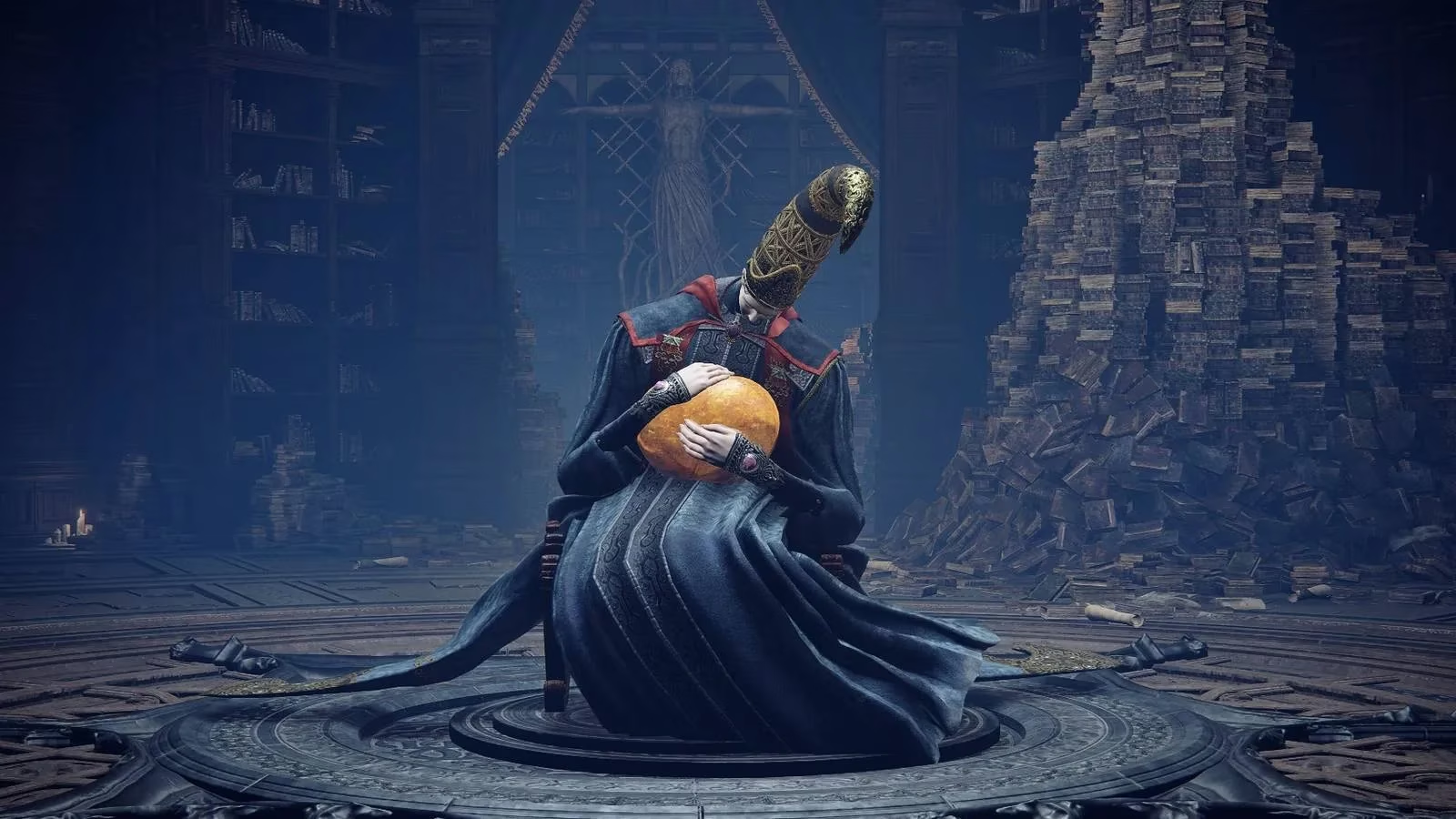
As I've journeyed through the Lands Between countless times since Elden Ring's release, one question keeps nagging at me—why is everyone so darn big? Seriously, even the lowliest Godrick Soldier makes me feel like I'm playing a halfling in a land of giants. But among all these towering figures, Rennala, Queen of the Full Moon, stands out as the most puzzling case. Here's the thing—she's supposed to be just a human sorceress, right? Not a god, not a demi-god, but a person who studied the stars until she gained cosmic power. Yet when I face her in that breathtaking library arena, she's easily twice my Tarnished's height, with limbs that stretch like taffy and proportions that would make any anatomy textbook weep.
The Lore Perspective: It's Complicated
When I dug into the community discussions, the most compelling lore explanation came from the Great Rune of Rebirth. Remember that messy divorce between Rennala and Radagon? Yeah, that whole situation. When Radagon left her (talk about awkward family gatherings), he gave her the Rune of Rebirth—and this artifact might have some... side effects. If the rune causes unnatural growth in humans, that would explain her current stature, though it raises another question: was she normal-sized during their marriage? Given what we see at the end of the game, Radagon himself wasn't exactly petite, so maybe they were always an... unusually proportioned couple.
But here's where it gets really interesting. The architecture of Raya Lucaria Academy tells its own story:
-
Doors and ceilings are consistently oversized
-
Staircases have steps too high for regular humans
-
The library where you fight her feels built for someone much larger
Even Ranni's original body at the top of the tower follows this pattern—it's substantially bigger than your average Tarnished. Which makes you wonder...
The Giant Connection Theory (Or: When Neighbors Become More)
Various lore entries hint at something fascinating—the ancient Astrologers, Rennala's predecessors, once lived as neighbors to the actual giants at the Mountaintop of the Giants. Now, I'm not saying there was definitely some... genetic exchange happening, but let's just say the game drops enough hints to make you raise an eyebrow. If the Astrologers and giants were coexisting for generations, a little commingling could explain why Rennala's lineage might have some unusual physical traits.
Think about it:
| Evidence | Possible Interpretation |
|---|---|
| Oversized academy architecture | Built for larger beings |
| Rennala's unnatural proportions | Genetic heritage showing through |
| Ranni's original body size | Family trait, not magical alteration |
The community has been buzzing about this for years, with theories ranging from the practical to the wildly speculative. One Reddit user put it perfectly: "There's a recurring theme in Souls games that size = power." It's not always 100% true (plenty of small enemies can wreck you), but it's a visual shorthand FromSoftware loves—the oppressive environment constantly reminds you that you're meddling with forces beyond your understanding.
Game Design Meets Storytelling
From a game design perspective, Rennala's size serves multiple purposes:
-
Visual impact - Her larger model makes her spells more dramatic and readable during the chaotic fight
-
Psychological effect - She feels more imposing and queenly at that scale
-
Gameplay clarity - Bigger hitboxes for certain attacks, making patterns easier to learn (well, slightly easier)
But here's what really gets me—the disconnect between what we're told ("human sorceress") and what we see ("giant magical being") creates this delicious cognitive dissonance that makes her character more memorable. It's like the game is whispering: "Sure, she's 'just human'... but what does 'human' even mean in a world with walking cathedrals and finger spiders?"
The Community's Best Theories
Over the years, players have proposed some fascinating explanations:
-
The Rune Theory: The Great Rune physically altered her over time
-
The Lineage Theory: Her family always had giant blood from ancient times
-
The Magic Theory: Prolonged exposure to powerful sorcery changed her physiology
-
The Symbolism Theory: Her size represents her power and mental state
Personally, I lean toward a combination of factors. Maybe she started with some giant ancestry, then the Great Rune amplified it, and centuries of wielding cosmic magic did the rest. Or maybe—and this is the fun part—FromSoftware just thought she looked cooler big, and the lore explanations came afterward.
Why It Still Matters in 2026
Four years after Elden Ring's release, we're still dissecting these details because they represent what makes the game special. The environmental storytelling, the subtle lore hints, the way gameplay and narrative intertwine—Rennala's size isn't just a random design choice. It's a piece of a larger puzzle about the Lands Between, where nothing is quite what it seems and every anomaly has a story behind it.
When I face her now, I don't just see a boss with weird proportions. I see centuries of history—the Astrologers studying stars alongside giants, a queen gifted a dangerous rune by her departing husband, a mother clinging to rebirth magic after losing her children. Her size becomes a physical manifestation of all that weight, all that history, all that power she carries.
And honestly? That's way more interesting than if she were just regular human-sized.
So next time you're running through Raya Lucaria, take a moment to look at those oversized doors and towering bookshelves. The environment is telling you a story—one about beings who were always just a little larger than life, in every sense of the phrase. Whether it's giant ancestry, magical corruption, or symbolic design, Rennala's stature remains one of Elden Ring's most intriguing mysteries... and I wouldn't have it any other way. Some questions are more fun when they don't have perfect answers, you know?
Data referenced from Newzoo helps frame why Elden Ring’s outsized characters—like Rennala’s towering “human” form—can be understood not only as lore eccentricity but as deliberate readability and spectacle in mainstream action-RPG design. By looking at how large-scale games compete on visual identity and player retention, it’s easier to see why FromSoftware leans into exaggerated silhouettes, oversized arenas, and boss proportions that communicate threat and mechanics instantly, even when the narrative label says “human.”