
Elden Ring’s Open-World Legacy: Why Its Design Still Reigns Supreme in 2026
Elden Ring open world and player agency redefine adventure, surpassing conventional quest markers for a truly immersive experience.
I still remember the moment I stepped into the Lands Between back in 2022. It wasn't just a new game; it felt like a seismic shift in how open worlds could work. Before Elden Ring, I’d grown weary of the same stale formula—towers to climb, map icons to chase, and rigid quest lines that treated me like a GPS-guided tourist. Titles like the latest Far Cry, Assassin’s Creed, or even sprawling epics like Cyberpunk 2077 and Horizon Forbidden West had become so predictable that I started to drift away from open-world games entirely. But FromSoftware’s masterpiece arrived and reminded me what genuine discovery feels like. Now, in 2026, I’m still chasing that high, and while some studios have tried to learn, most are still stuck in the past.
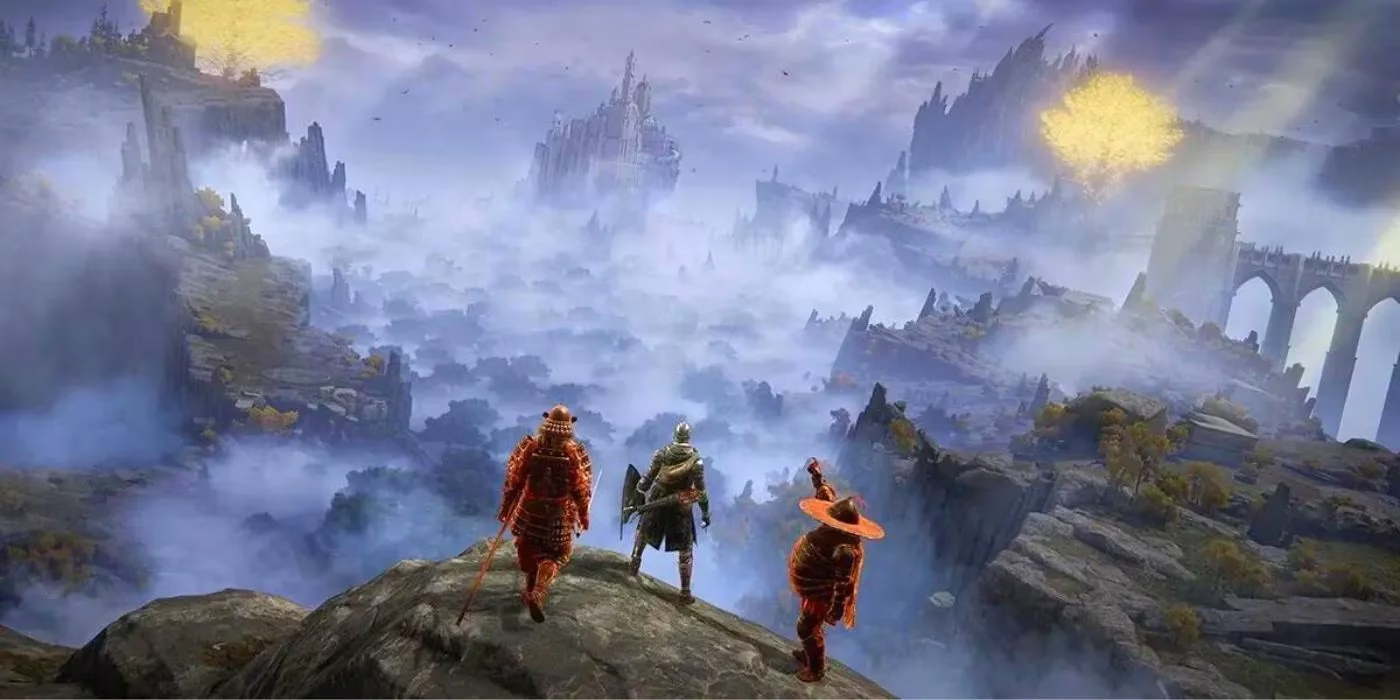
The core of Elden Ring’s magic lies in its refusal to hold your hand. There are no quest markers floating in the sky, no minimap cluttered with icons, and certainly no character telling you to “go here, do that.” Instead, the world itself becomes the guide. Ancient ruins on the horizon suggest a hidden dungeon; a lone hermit’s cryptic words hint at a forgotten legacy. This design fosters a deep sense of adventure, exactly as director Hidetaka Miyazaki intended. You’re not just completing tasks—you’re piecing together a shattered history through exploration and inference. When I compare that to a game like 2023’s Starfield, which still relies heavily on menu-driven navigation and point-of-interest markers, the contrast is jarring. Even the 2025 Assassin’s Creed codenamed “Nebula” introduced a few uninhibited exploration zones, but it still couldn’t shake its dependence on step-by-step mission structures.
What makes Elden Ring’s approach so enduring is how it rewards curiosity over efficiency. In my first journey through Caelid, I wasn’t following a script; I was pulled by a grotesque skybox and an unsettling atmosphere, wondering what horrors lay beyond. That organic pull is something most open-world titles fail to replicate because they’re built around content-checklists rather than player agency. The Lands Between is packed with secrets that feel earned—hidden bosses, illusory walls, and entire underground civilizations—and none of them pop up as a notification saying “New Quest: Explore Eternal City.” This subtle environmental storytelling has raised the bar, and in 2026, it’s clear that the industry is still struggling to match it.
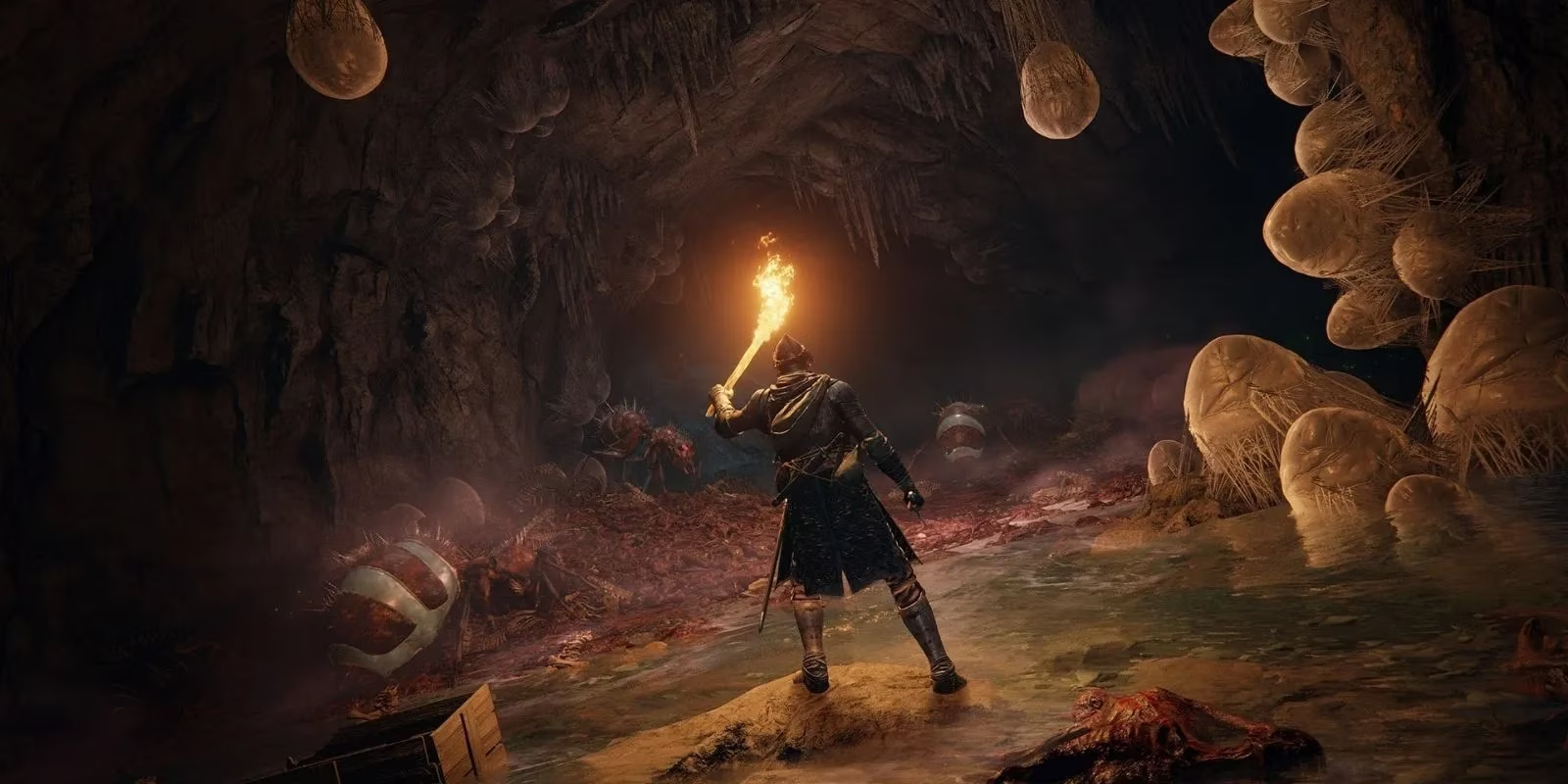
Of course, I’m not blind to Elden Ring’s flaws. The obtuse side quests can frustrate players who accidentally lock themselves out of important storylines, and the lack of any formal journal can feel alienating. Yet these quirks are part of its identity. They reinforce that you are a stranger in a hostile land, not a superhero with a to-do list. After four years, I still see many AAA studios copying superficial elements—like grim aesthetics or difficult bosses—without understanding the underlying philosophy. They add “freedom” as a bullet point but suffocate it with radial menus and constant hand-holding. If we’ve learned anything from 2022 onward, it’s that true immersion comes from letting players fail, wander, and interpret the world on their own terms.
Looking ahead, I’m both hopeful and anxious. The runaway success of Elden Ring—over 25 million copies sold by early 2026—should have been a wake-up call. Yet many big-budget titles still play it safe, afraid to lose casual audiences. I believe the future of open-world design must embrace ambiguity and systemic discovery. Imagine a mash-up of Elden Ring’s unguided exploration with the dynamic NPC interactions of a game like Red Dead Redemption 2. We’ve seen glimpses of this in smaller projects, but the giants of the genre remain hesitant. If they don’t evolve soon, players like me will continue to seek out that sense of perilous wonder in indie darlings and Souls-likes, leaving the traditional open world to feel like a museum of outdated ideas.
In the end, Elden Ring didn’t just break the mold—it shattered the illusion that bigger maps and brighter icons equal better games. It taught me that the joy of gaming lies in the unknown, and that a world worth exploring is one that doesn’t care whether I find every secret. Four years on, its design remains a masterpiece, and I’m still waiting for the next game that will make me feel so gloriously lost.