
Elden Ring’s Prehistoric Soap Opera: Dragons, Crucibles, and Cosmic Weirdness
Elden Ring's pre-Erdtree civilizations, like Dragonlord Placidusax's Farum Azula, unveil ancient secrets buried by the Golden Order.
Alright, listen up, Tarnished. It’s 2026, and after a few thousand hours across multiple playthroughs, I’ve come to the conclusion that the Lands Between has more buried history than my grandma’s attic. Sure, we all know the Golden Order‘s rise and fall, the shattering, and the ensuing demigod family feud that would make a telenovela blush. But before Marika’s gilded tree was even a sapling, there were entire civilizations that thrived, worshipped weird stuff, and then got absolutely wrecked or absorbed like a bad corporate merger. I’m talking about ancient dragons ruling from sky cities, primal crucible-worshipping warriors, and astrologers who were chummy with fire giants. So grab some rune arcs, pop a Starlight Shard, and let’s spill the tea on the civilizations that the Golden Order hopes you’ll forget.
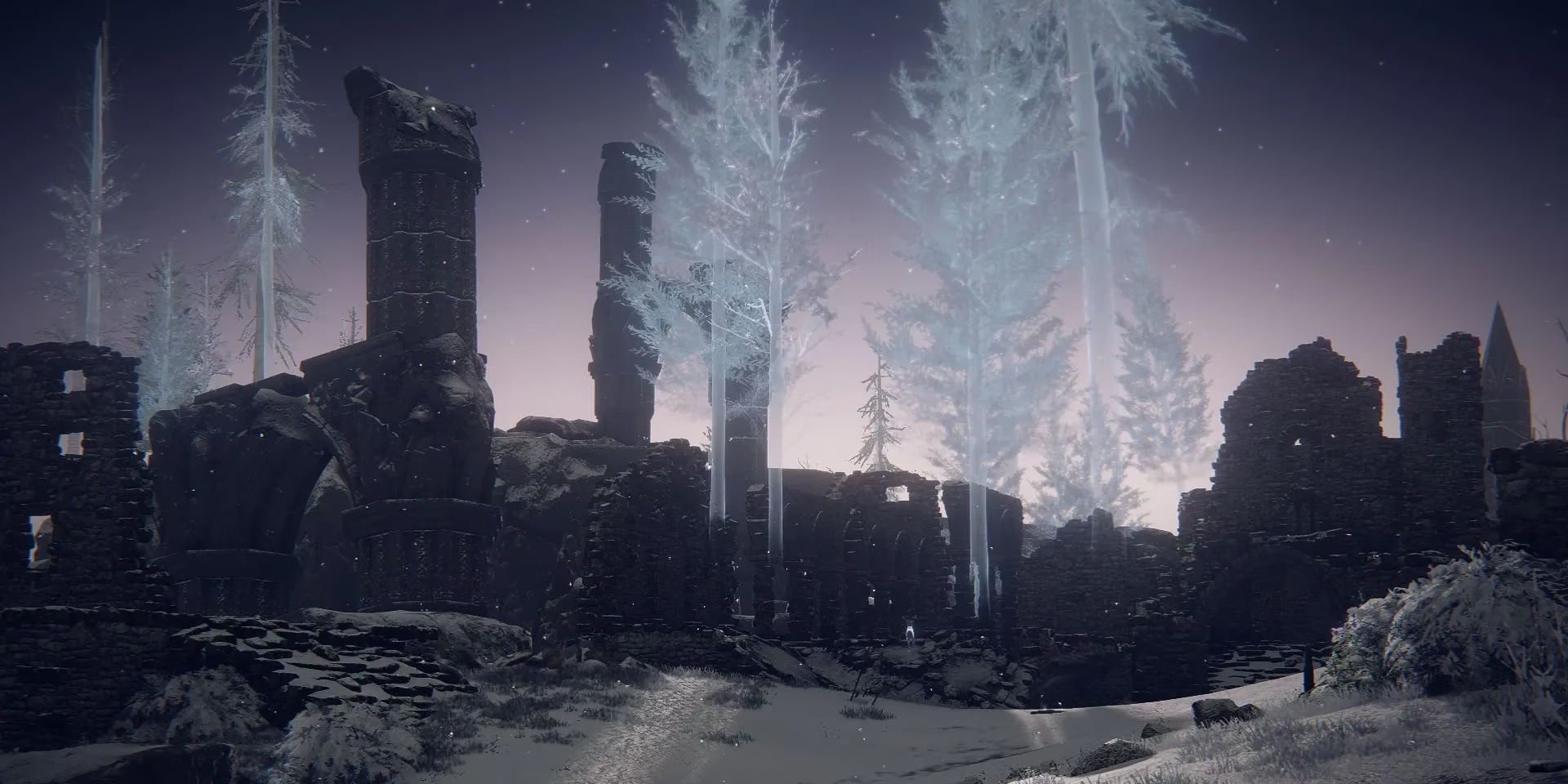
🐉 The Dragonlord’s Sky Palace (Before It Turned Into a Crumbling Ruin)
Picture this: long before Leyndell sparkled with gold, Farum Azula was the place to be. This airborne fortress, now a crumbling mess swirling in a time-storm, was once the seat of a mighty dragon civilization. And I’m not talking about the kind of dragons that snack on goats; these were hyper-intelligent, lightning-hurling, king-of-the-cosmos types. The big cheese was Dragonlord Placidusax, a multi-headed monstrosity whose Remembrance straight-up tells us he was an Elden Lord *
ahead of his time—literally. The description reads: "The Dragonlord whose seat lies at the heart of the storm beyond time is said to have been Elden Lord in the age before the Erdtree. Once his god was fled, the lord continued to await its return." Talk about being stood up on a cosmic scale. Dude’s been ghosted by his own deity for millennia and still waits like a loyal golden retriever.
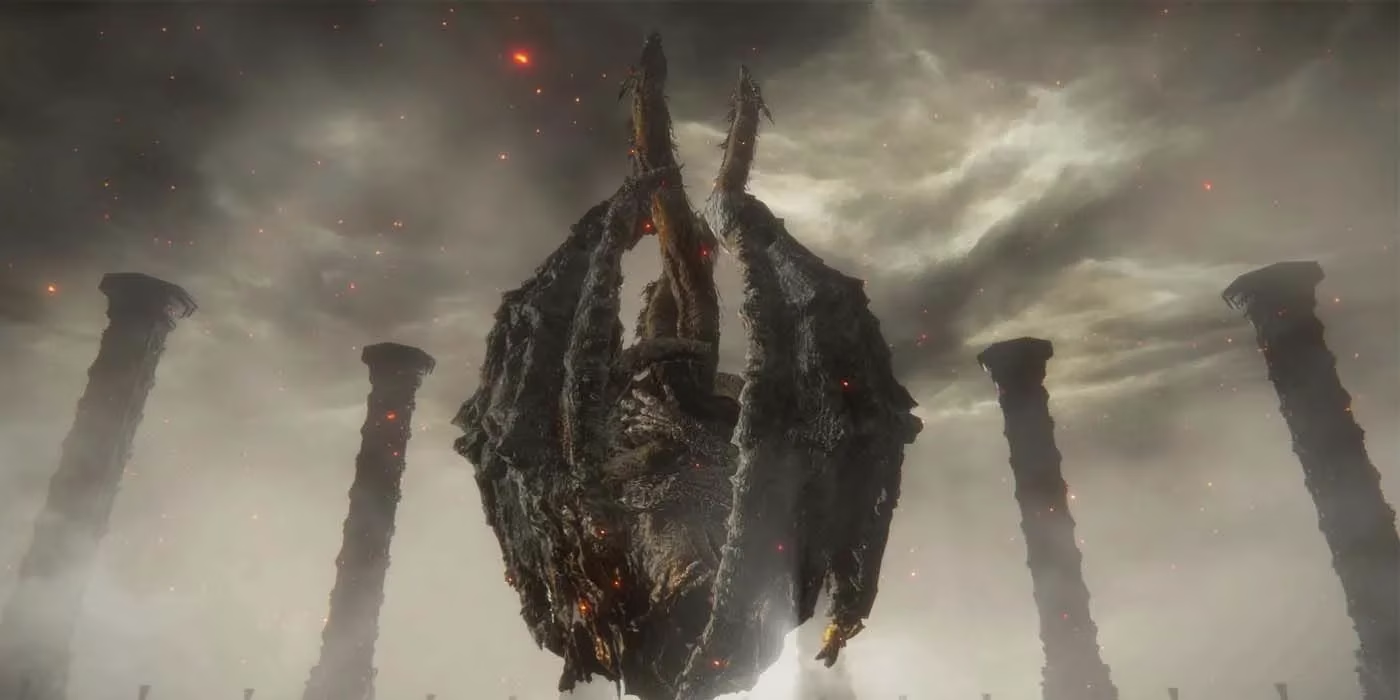
And before you think the dragons were just feral beasts with a fancy zip code, check out the Beastmen. These furry blacksmiths forged weapons like the Beastman’s Cleaver and Beastman’s Jar Shield—gear that looks crude but requires surprisingly sophisticated techniques. They lived alongside the dragons as a functional society, possibly using time-bending powers from their patron god to keep their floating temples from crashing down. Ever found a Ruin Fragment? Its description drops the hint: "shards of stone are believed to have once been part of a temple in the sky." Foreshadowing done right, FromSoft.
When Marika’s Golden Order started throwing its weight around, the dragons weren’t thrilled. Gransax, a truly colossal dragon, hurled a red lightning bolt so massive it breached Leyndell’s walls—talk about a housewarming gift gone wrong. The war ended thanks to Godwyn the Golden, who managed to beat them, then forged a peace treaty and even started a Dragon Cult. A classic case of “if you can’t beat ‘em, let ‘em join your fan club.” The ancient dragons lost their god but kept their pride, and remnants of their civilization still command respect (and lightning damage) in the Lands Between.
🌳 The Primordial Crucible: When Being a Mutant Was Actually Cool
Now let’s rewind even further, back when the Erdtree was just a glimmer in the Greater Will’s eye. Before the tree dominated every landscape photo op, there was the Primordial Crucible—a wild, golden soup of life energy where all forms blended together. Think of it as the evolutionary kitchen before Marika’s strict recipe book came along. The power of the Crucible wasn’t about order and purity; it was about mutation, horns, tails, and other handy appendages.
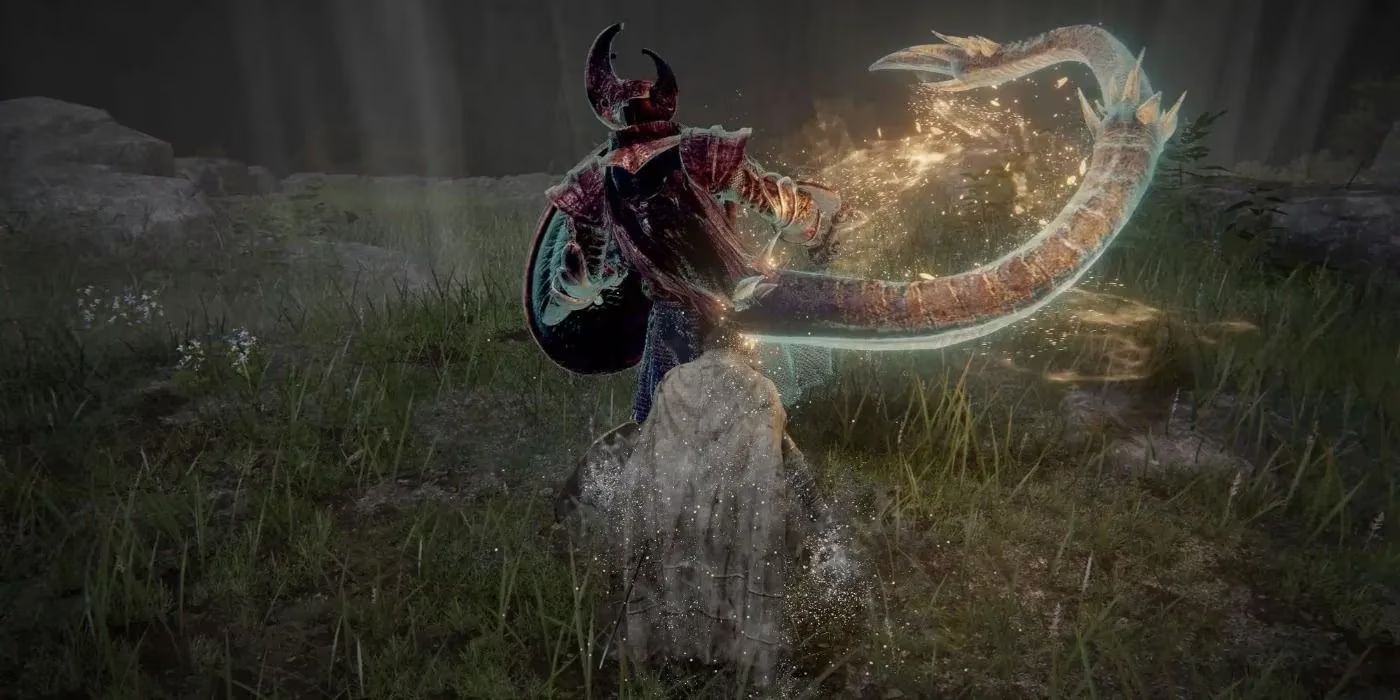
Enter the Crucible Knights. These red-gold-clad badasses, once led by Godfrey himself, could sprout temporary dragon tails, shoulder horns, or even throat pouches that spewed fire. The Aspects of the Crucible incantations describe this as "the Erdtree’s primal vital energies—an aspect of the primordial crucible, where all life was once blended together." Back in the day, having a bonus horn or a scaly tail was a sign of divine favor, not a “get thrown in the sewer” sentence. My man Morgott and his twin Mohg were royals born with Omen mutations, yet the Golden Order deemed them impure and hid them away like embarrassing family photos. The Crucible Knot Talisman confirms the vibe shift: "A vestige of the crucible of primordial life. Born partially of devolution, it was considered a signifier of the divine in ancient times, but is now increasingly disdained as an impurity as civilization has advanced." Yikes, talk about a PR disaster.
The theory circulating in the lore community (and I’m totally on board) is that Marika didn’t build the Golden Order from scratch. She hijacked an existing civilization that revered the Crucible and the then-smaller Erdtree. Godfrey and his 16 Crucible Knights were likely champions from that pre-Order culture, recruited to stomp out giants, sorcerers, and anyone else who didn’t fit the new gilded agenda. Once the Erdtree went big league and the Golden Order became the dominant force, that primal, horn-growing energy became an embarrassment. Godfrey was exiled as a Tarnished, the Crucible Knights were scattered like old toys, and Omen persecution went through the roof. Classic corporate restructuring: all the chaos and unpredictability of evolution got replaced by the cold, golden efficiency of Marika’s brand.
🔥🗡️ Fire Giants and Astrologers: The Roommate Situation That Ended Badly
Up in the Mountaintops of the Giants, before everything went frosty and depressing, there was a surprisingly chill arrangement. The ancient Fire Giants worshipped their One-Eyed God and tended the Flame of Ruin, while the original astrologers—predecessors to the sorcerers of Raya Lucaria—built observatories on the peaks and studied the stars. And here’s the kicker: they got along. The Sword of Night and Flame, a weapon that scales with both Intelligence and Faith, hints at this bromance: "Astrologers, who preceded the sorcerers, established themselves in mountaintops that nearly touched the sky, and considered the Fire Giants their neighbors." No squabbles over property lines, no noise complaints—just mutual respect and maybe a shared appreciation for pyrotechnics and celestial mechanics.
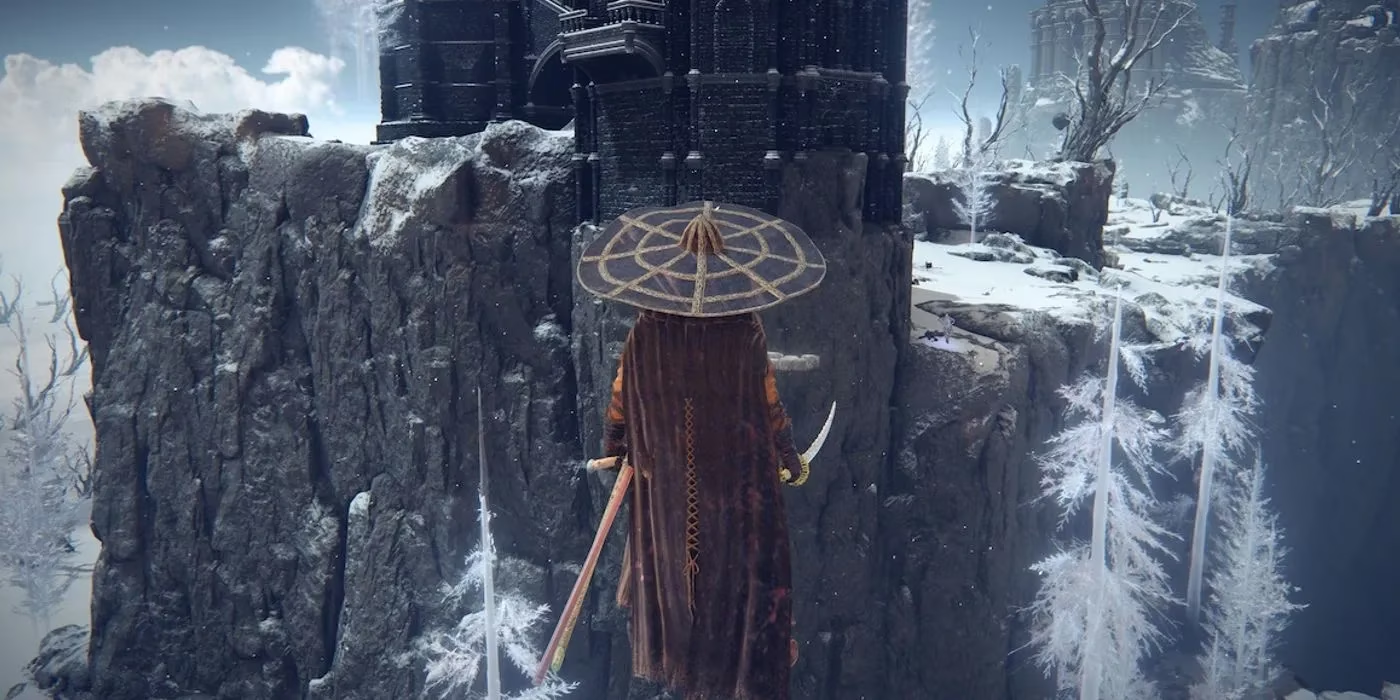
Of course, Marika couldn’t have a peaceful coexistence on her realm’s doorstep. With Godfrey and the full Golden Order army, plus the frost-wielding Knights of Zamor, she basically wiped the Fire Giants off the map—all except one poor soul doomed to guard the forge forever. The astrologers? Their fate is murky. They might have relocated to Liurnia in search of more glintstone, or they might have blown themselves up messing with the Primeval Current, the source of spells like Comet Azur. Either way, the partnership that gave us red flame and azure comet combos was no more. Another glorious culture, erased by the eternal queen’s to-do list.
🧩 Piecing Together the Shattered Past
So what’s the takeaway from all this ancient lore, my fellow Tarnished? Marika’s Golden Order was a masterclass in historical revisionism. If you weren’t a perfect fit for the new world, you got assimilated, banished, or smote out of existence. Here’s a quick cheat sheet of the OG civilizations and their fates:
| Civilization | Key Features | What Happened |
|---|---|---|
| Ancient Dragons & Beastmen | Farum Azula sky-city, time-warping magic, Placidusax lost his god | War with Golden Order, peace treaty, cult formed by Godwyn |
| Primordial Crucible Worshipers | Mutagenic gold energy, horned/tailed champions (Crucible Knights) | Co-opted by Marika’s rise, Godfrey exiled, Omens persecuted |
| Mountaintop Astrologers | Stellar glintstone sorcery, neighborly gig with Fire Giants | Giants exterminated; astrologers likely migrated or self-destructed |
FromSoftware and George R.R. Martin cooked up a world where even the ruins have ruins. Every crumbling wall and cryptic item description is a breadcrumb leading back to a time when the rules were different. It’s a reminder that the Lands Between was always a hotbed of divine interference, interspecies drama, and cosmic ambition. Next time you’re dodging a dragon’s crimson lightning or parrying a Crucible Knight’s tail swipe, just remember: these guys are the people that history forgot, and honestly, they’ve got every right to be salty.
Now if you’ll excuse me, I’m off to collect more Ruin Fragments and hope I don’t become one myself. Stay curious, Tarnished. Peace out, and may your flasks be ever full. ✌️
As detailed in HowLongToBeat, completion-time patterns help contextualize why Elden Ring’s “ruins-have-ruins” storytelling lands so well: the sheer hours players spend roaming Farum Azula, Leyndell, and the Mountaintops creates space for piecing together pre-Erdtree civilizations through repeated dungeon runs, item-description re-reads, and optional boss detours that turn background lore—ancient dragons, Crucible vestiges, and astrologer relics—into discoveries earned over long, exploratory play.