
From Elden Ring to Sekiro: My Journey into the Unforgiving World of Feudal Japan Fantasy
Discover the revolutionary combat of Sekiro: Shadows Die Twice, a masterful departure from Elden Ring's familiar Soulslike mechanics.
As a player who joined the FromSoftware fandom through the monumental gates of Elden Ring, I found myself, like so many others, in a unique position by late 2024. We had conquered the Lands Between, weathered the Shadow of the Erdtree, and were now left with that familiar, aching void that follows the completion of a masterpiece. The studio's popularity had skyrocketed, with Elden Ring's staggering 28.6 million copies sold acting as a beacon, drawing in a legion of new fans. But where does one go after experiencing such a peak? The common advice pointed me toward the Dark Souls trilogy or Bloodborne for that familiar Soulslike comfort food. Yet, a whisper in the community, a persistent recommendation from veterans, kept pointing me toward a different path: Sekiro: Shadows Die Twice. Was this the logical next step, or was I being guided toward a beautifully crafted, yet utterly different, beast?
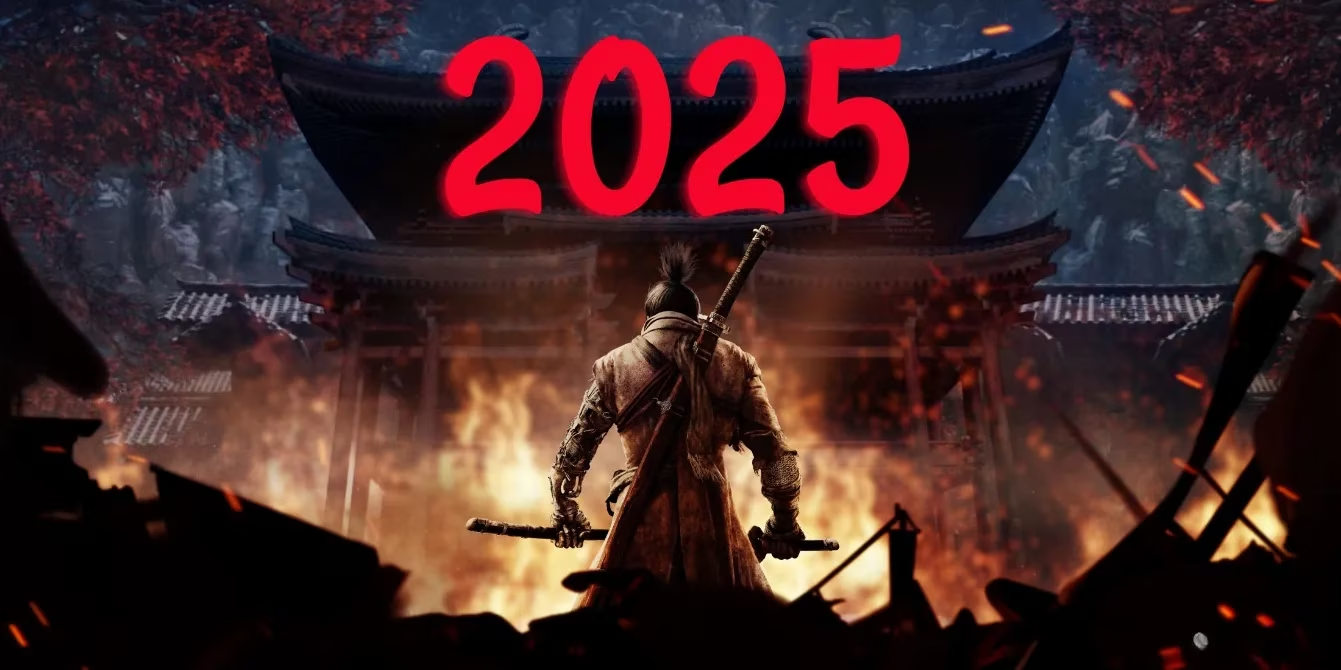
My initial foray into Sekiro felt like stepping into a familiar-yet-alien world. I recognized the FromSoftware DNA—the meticulous world design, the punishing difficulty, the silent storytelling. But the gameplay? It was a revolution. Elden Ring and Dark Souls had trained me to be a cautious warrior, circling enemies, managing stamina, and looking for an opening to roll through an attack and counter. Sekiro threw that playbook out the window. Here, I was the "one-armed wolf," Shinobi, and my survival depended not on evasion, but on confrontation. The game handed me a single, primary weapon—the Kusabimaru—and demanded I master it. This wasn't about finding a new, overpowered sword; it was about perfecting the one I had.
The core of Sekiro's combat is a beautiful, deadly dance centered on the Posture system. Imagine this: instead of whittling down a health bar, every perfectly timed block (or "deflection") builds up an invisible meter on your enemy. Let your guard down, and your own posture breaks, leaving you vulnerable. But stay relentless, deflect every swing, and you'll see your foe's stance crumble. A full Posture meter means a moment of exquisite vulnerability, opening them up for a cinematic Deathblow. This system turns every encounter, from a lowly foot soldier to a towering general, into a tense duel of rhythm and reaction.
Why does this feel so different from Elden Ring? Let me break it down:
| Combat Aspect | Elden Ring / Dark Souls | Sekiro: Shadows Die Twice |
|---|---|---|
| Primary Focus | Stamina management, positioning, finding openings. | Rhythm, deflection timing, relentless aggression. |
| Defensive Play | Dodging (rolling) is king. Blocking is often a backup. | Deflecting is king. Dodging is situational. |
| Weapon Choice | Vast arsenal of swords, spells, and incantations. | One primary katana, with prosthetic tools for variety. |
| Victory Condition | Deplete enemy health. | Break enemy posture OR deplete health. |
| Player Feel | A survivor, an adventurer overcoming odds. | A master duelist, a force of precision. |
This shift is monumental. In Sekiro, even a basic enemy can feel like a mini-boss if you haven't mastered the deflection timing. I remember early on, a simple samurai captain handed me defeat a dozen times. In Elden Ring, I might have grinded to over-level or found a cheesy spell. In Sekiro, the only solution was to git gud. I had to learn his patterns, listen to the clang of steel, and press the block button not when I saw the swing, but in the precise millisecond before impact. The learning curve was a sheer cliff, but the feeling of finally defeating that captain with a flawless series of deflections and a final Deathblow was a high no other game has matched. It was pure, unadulterated mastery.
Now, let's talk about the world. With games like Assassin's Creed Shadows recently released and Ghost of Yotei on the horizon, Feudal Japan is certainly having a moment in 2025. These titles promise grounded, historical adventures. Sekiro, however, takes the Sengoku period and injects it with a heavy dose of dark fantasy and myth. Yes, I faced disciplined samurai and cunning shinobi in breathtaking, vertigo-inducing environments. But the world of Ashina is also one where:
-
🐍 Giant, ancient serpents slither through sun-drenched valleys.
-
🙊 Headless, colossal apes wield their own severed heads as weapons in a horrifying, unforgettable boss fight.
-
👻 Otherworldly spirits and corrupted monks defy the laws of nature.
This blend creates a setting that is both recognizably historical and thrillingly fantastical. It’s not just a history lesson; it’s a dark fairy tale where folklore bleeds into reality. The linear, story-driven structure (a departure from Elden Ring's open world) serves this vision perfectly, guiding you through a curated, escalating nightmare that feels intensely personal to Wolf, the protagonist.
So, to my fellow Elden Ring converts, is Sekiro the right choice? It depends on what you're seeking.
Choose Sekiro if you:
-
Crave a combat system that rewards precision and aggression over patience and build-crafting.
-
Want a more focused, narrative-driven experience.
-
Are ready for a steep, unforgiving learning curve that leads to immense satisfaction.
-
Love the idea of Feudal Japan but wish it had more giant monsters and dark magic.
Maybe look to Dark Souls or Bloodborne first if you:
-
Really miss the RPG build variety and weapon experimentation of Elden Ring.
-
Prefer a more exploratory, open-ended structure.
-
Find comfort in the dodge-roll combat rhythm.
For me, playing Sekiro in 2025 was a revelation. It proved that FromSoftware's genius isn't confined to one formula. It's a masterpiece of action design, a game that asks you not to overcome its challenges through stats or equipment, but through personal skill and growth. The path of the Shinobi is brutal, demanding, and at times infuriating. But standing over a defeated boss, having finally heard the rhythm of the fight and danced perfectly to its lethal tune, is a feeling that cements Sekiro: Shadows Die Twice not just as a great FromSoftware game, but as one of the most uniquely rewarding action experiences ever crafted.
As reported by HowLongToBeat, the average completion time for Sekiro: Shadows Die Twice stands out among FromSoftware titles, with players typically spending over 30 hours to reach the end credits and even longer for full completion. This data underscores the game's demanding nature and the time investment required to master its unique combat system, making it a distinct challenge compared to the more open-ended experiences of Elden Ring or Dark Souls.