
FromSoftware and Soulslike Games: Miyazaki's Humble Perspective on a Genre-Defining Formula
Discover the captivating evolution of soulslike games as visionary Hidetaka Miyazaki reveals how FromSoftware masterfully synthesized existing mechanics, crafting unforgettable experiences of death, learning, and interconnected worlds.
As a dedicated player who has spent countless hours navigating the treacherous landscapes of Lordran, Drangleic, and the Lands Between, I've often reflected on what makes these experiences so uniquely compelling. When the term 'soulslike' comes up in gaming conversations today, our minds instantly conjure images of FromSoftware's masterpieces—the intricate world design, the punishing yet fair combat, and that profound cycle of death and learning. It's fascinating to consider that Hidetaka Miyazaki, the visionary behind many of these worlds, doesn't necessarily view this formula as a completely new invention from his studio.
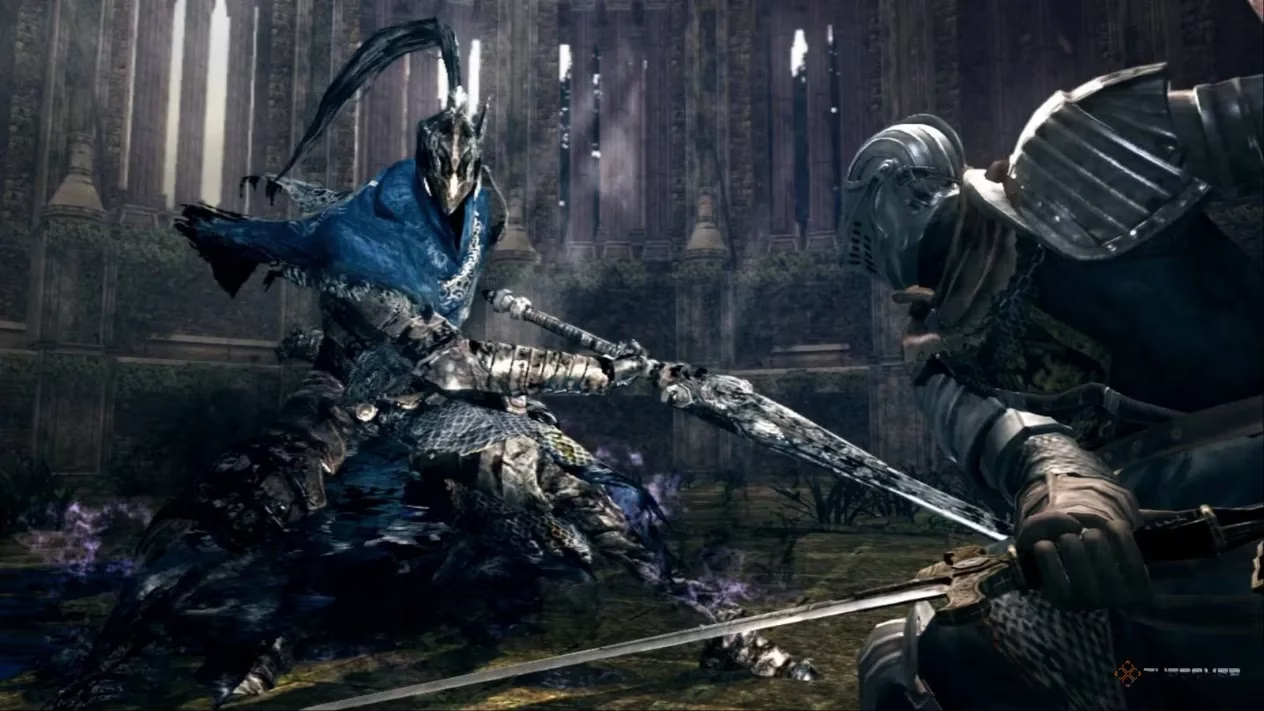
Miyazaki's perspective resonates deeply with me as someone who has witnessed the evolution of challenging games. He suggests that the gaming community had developed an appetite for experiences where failure wasn't just a setback but an integral part of progression. Before Demon's Souls and Dark Souls, many games treated death as a simple reload checkpoint moment, but players were craving something more substantial—a system where each defeat taught you something meaningful about the world, enemy patterns, or your own approach. FromSoftware didn't necessarily invent this craving; they simply provided the most satisfying answer to it.
The core gameplay loop that defines soulslikes feels almost inevitable in retrospect:
🔁 The Death-Learning Cycle: Instead of punishing players arbitrarily, each defeat provides crucial information about enemy attacks, environmental hazards, or strategic approaches.
🗺️ Interconnected World Design: The metroidvania-inspired level structure creates a profound sense of discovery and mastery as you unlock shortcuts and understand spatial relationships.
⚔️ Pattern Recognition Combat: Boss encounters function almost like rhythmic puzzles where observing and memorizing attack patterns becomes key to success.
What strikes me most about Miyazaki's humility is his acknowledgment of gaming's evolutionary nature. When I look back at older titles, I can indeed see fragments of what would become the soulslike formula scattered throughout gaming history. Games like King's Field (FromSoftware's own earlier work) contained the seeds of atmospheric, challenging dungeon crawling. Blade of Darkness, released back in 2001, featured weighty combat and corpse-running mechanics that feel remarkably prescient. Even classic titles like Castlevania: Symphony of the Night offered that interconnected world design that soulslikes would later perfect.
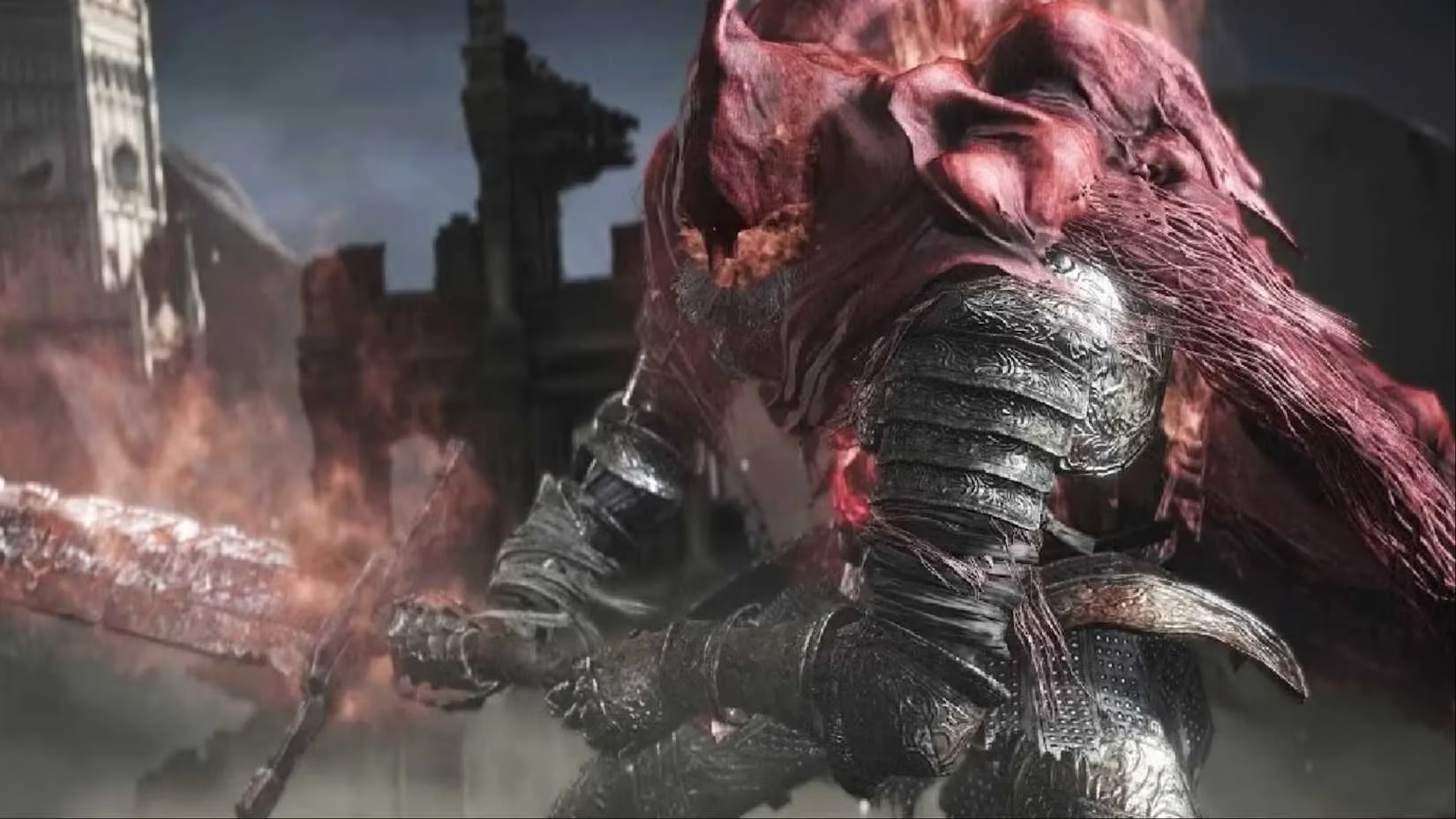
FromSoftware's true genius wasn't in creating entirely new mechanics from nothing, but in their masterful synthesis and execution. They took these disparate elements—some borrowed, some refined—and wove them into a cohesive, atmospheric whole that resonated with millions. The studio's particular design DNA, characterized by environmental storytelling, deliberate combat pacing, and minimalist narrative delivery, created the perfect vessel for these gameplay ideas.
Consider how soulslikes typically handle narrative compared to other RPGs:
| Traditional RPGs | Soulslikes |
|---|---|
| Explicit cutscenes and dialogue | Environmental storytelling and item descriptions |
| Clear quest markers and objectives | Organic discovery and interpretation |
| Direct character motivations | Ambiguous lore requiring player investigation |
This approach to storytelling perfectly complements the gameplay philosophy. Just as you must piece together combat patterns through observation and repetition, you must assemble the world's history through careful attention to details in the environment, enemy placement, and item descriptions. This creates a remarkable synergy where gameplay and narrative reinforce the same themes of perseverance, discovery, and overcoming seemingly insurmountable challenges.
As we move through 2025, the soulslike genre continues to evolve and expand far beyond FromSoftware's own catalog. We've seen remarkable interpretations from studios worldwide—games that take the foundational principles and apply them to different settings, combat styles, and narrative approaches. Yet they all share that core DNA that Miyazaki describes: treating death not as failure but as tuition paid toward mastery.
What's particularly interesting to me is how this design philosophy has influenced games outside the traditional action-RPG sphere. We now see soulslike elements appearing in everything from platformers to shooters, each adapting the risk-reward structure, checkpoint systems, and learning-through-failure mentality to their respective genres. This widespread adoption suggests that Miyazaki was absolutely correct—players were hungry for this type of experience, and FromSoftware simply provided the blueprint that countless others have since built upon.
Reflecting on my own journey through these games, I recognize the truth in Miyazaki's humble assessment. The satisfaction of finally defeating a boss that had defeated me dozens of times, the thrill of discovering a hidden path that connects two seemingly distant areas, the gradual understanding of a world's tragic history—these experiences feel timeless rather than invented. They tap into something fundamental about how we learn and overcome challenges, both in games and in life.
FromSoftware's legacy, then, isn't merely about creating a popular genre template. It's about demonstrating that games could demand more from players while respecting their intelligence and persistence. It's about creating worlds that feel genuinely mysterious and rewarding to explore rather than simply checklist destinations. And perhaps most importantly, it's about proving that difficulty, when thoughtfully implemented, isn't a barrier to enjoyment but rather a pathway to some of gaming's most memorable and satisfying moments.
As I look forward to future soulslikes and FromSoftware's next creations, I appreciate Miyazaki's perspective all the more. Great game design often feels less like invention and more like discovery—uncovering what players have always wanted but didn't know how to articulate. The soulslike formula works not because it's revolutionary in its individual parts, but because it combines those parts into a whole that's greater than their sum, creating experiences that continue to resonate, challenge, and inspire players around the world years after their introduction.