
Gaming's Biggest Letdowns: Epic Boss Buildups That Fizzle Out
Video game bosses like Ganondorf and Malenia deliver epic atmosphere but disappoint with flawed fight mechanics, highlighting the ultimate gaming bait-and-switch.
Gamers in 2026 are still talking about that all-too-familiar feeling of hype and subsequent disappointment. The conversation, which took off on forums like Resetera, zeroes in on video game bosses that absolutely nail the atmosphere and setup but then totally flop when it comes to the actual fight mechanics. It's the ultimate gaming bait-and-switch, and players are airing their grievances loud and clear. The core issue? An unforgettable journey leading to a painfully forgettable destination. These discussions aren't just about venting; they're a masterclass in what separates a good boss from a truly legendary one.
The King of Disappointment: Ganondorf in Ocarina of Time
Let's kick things off with the OG of letdowns, a name that still echoes in these debates: Ganondorf from The Legend of Zelda: Ocarina of Time. Even now, players remember the chills. The slow climb up Ganon's Tower, the haunting organ music growing louder, the stunning stained-glass chamber, and the sight of the King of Evil himself just casually playing the damn instrument. The vibe was immaculate, pure cinema. 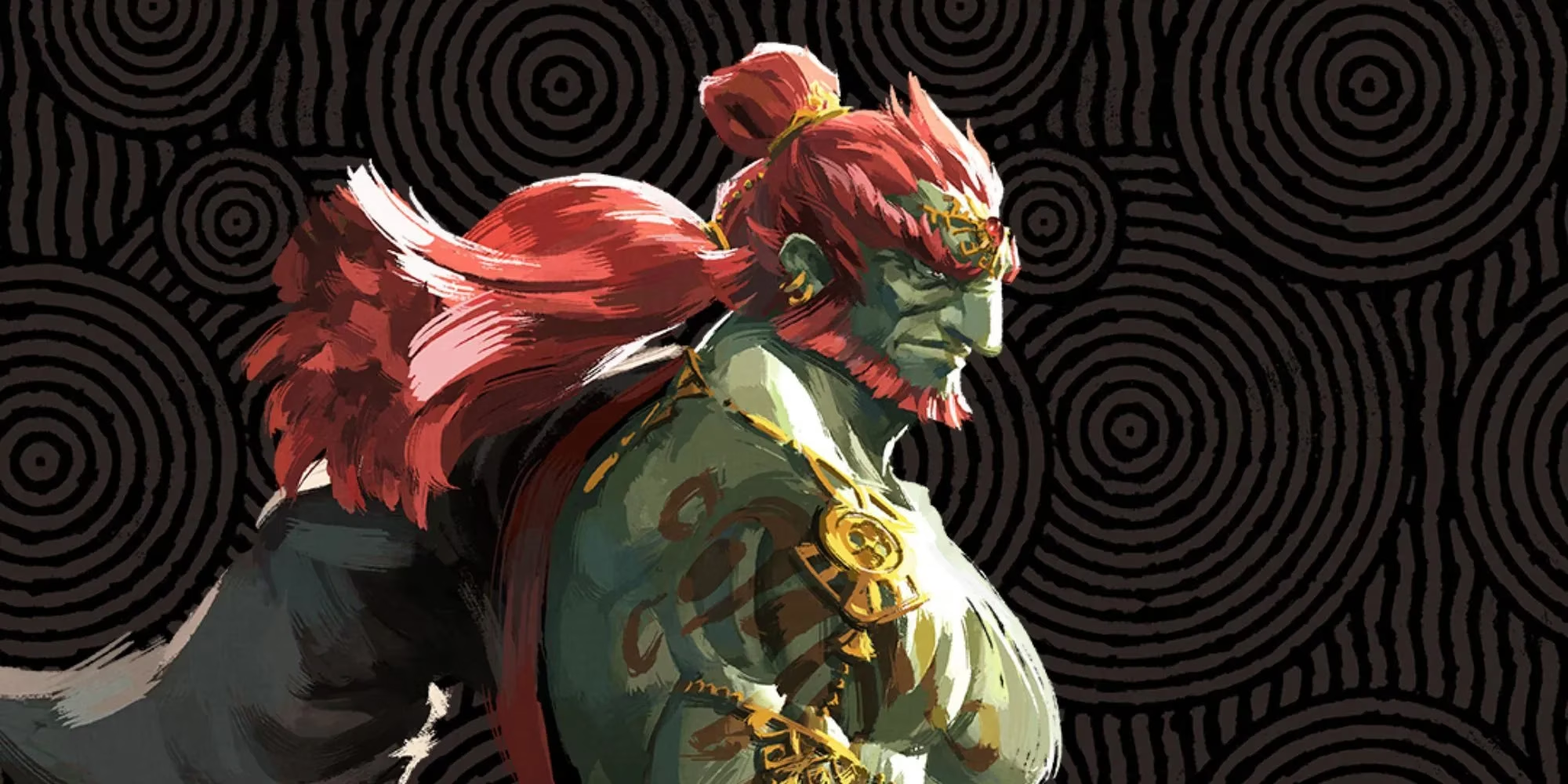
But then the fight starts... and it's basically just a game of magical tennis. Players stand in one spot and reflect energy balls back and forth. The mechanics are repetitive, predictable, and require minimal strategy. As one player, Lightjolly, perfectly summed it up: "The whole buildup and setup was beyond amazing even to this day. But man the battle itself seemed much more epic as a kid. Stand in a spot and play some electric tennis." It's the textbook example of atmosphere carrying a fight that's, mechanically speaking, kind of a snooze fest.
The Modern Malaise: Malenia, Blade of Miquella
Fast forward a couple of decades, and the problem persists, even in modern masterpieces. Enter Malenia from Elden Ring. FromSoftware built her up as this mythic, unstoppable force—a goddess of rot who had never known defeat. The lore, the aesthetic, the lead-up to her bloom-filled arena... it's all chef's kiss. 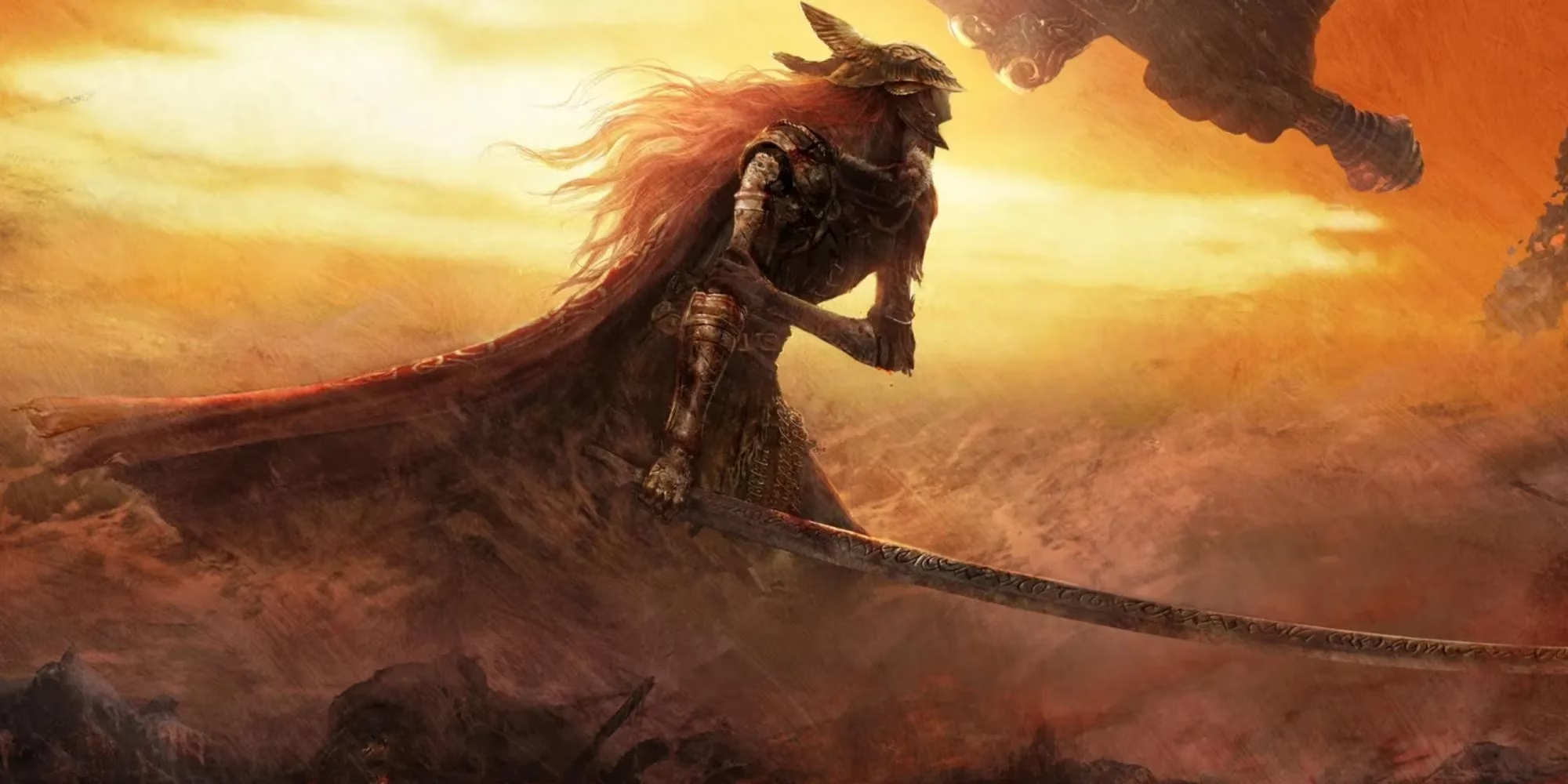
Yet, for many, the battle itself feels... off. The critique isn't that she's too easy (far from it!), but that her difficulty feels artificially inflated by one specific, notoriously brutal move: Waterfowl Dance. Players argue that without this one ultra-hard-to-dodge attack, her moveset can feel simplistic for a FromSoftware endgame boss. The community sentiment is captured in comments like, "They had to give her an annoying ability and broke one of her attacks to make her harder. One of the most disappointing From Software bosses." Another player, DaciaJC, expressed the collective frustration: "I so very much want to love her boss fight... but Waterfowl Dance ends up trashing the experience every single time." It's a fight where the buildup promises a complex dance, but the reality for many is getting stuck on one impossible step.
The Anatomy of a Letdown: Why This Happens
So, what's the common thread here? Why do developers keep creating these atmospheric masterpieces that stumble at the finish line? Gamers in the discussion pinpointed a few key factors:
-
The Hype Trap: When the story, music, and visuals create an unparalleled sense of anticipation, the actual gameplay has a mountain to climb. If it's merely "good," it feels like a failure.
-
Mechanical Mismatch: The boss's mechanics don't reflect their narrative power. A god-like being should not be defeated by a single, repetitive trick.
-
Artificial Difficulty: Relying on one-shot kills, endless health pools, or a single overpowered move (looking at you, Waterfowl) to create challenge, rather than designing a nuanced, learnable moveset.
Hall of Shame: Other Notable Mentions
The discussion didn't stop at Ganondorf and Malenia. The community rallied together to list other bosses that fit the bill:
| Boss Name | Game | The Letdown |
|---|---|---|
| The Boss | Metal Gear Solid 3 | Incredible emotional and narrative weight, but the CQC fight can feel clunky and simplistic. |
| Alduin | The Elder Scrolls V: Skyrim | The World-Eater, the prophecy's climax... and you basically just shout at a dragon in a gray void. Major anticlimax. |
| Dark Beast Ganon | The Legend of Zelda: Breath of the Wild | The epic, giant-sized finale is visually stunning but mechanically just... ride around and shoot glowing spots. |
What Makes a Truly GOATed Boss Fight?
For every disappointment, there's a boss that gets it perfectly right. The community consensus on the hallmarks of a S-tier boss encounter:
-
Harmonious Blend: The atmosphere and mechanics are in perfect sync. The boss feels as powerful and dangerous as the story says they are.
-
Fair Challenge: The difficulty comes from a complex, learnable moveset that tests your skills, not from cheap tricks or overwhelming stats.
-
The "Dance": The fight feels like a rhythmic back-and-forth. You learn the patterns, find the openings, and execute—it's satisfying and fluid.
-
Memorable Mechanics: A unique gimmick or phase change that evolves the fight and makes it unforgettable (think Shadow of the Colossus or Sekiro).
In 2026, these discussions are more vital than ever. Player feedback directly fuels the evolution of game design. By calling out the misses, the community helps developers refine their craft. The goal isn't to bash games but to champion the creation of those rare, perfect encounters—the ones where the epic journey is matched by an equally epic climax. The kind of fight that leaves your hands shaking and has you immediately hitting "New Game+" just to experience it all over again. Because at the end of the day, gamers just want the payoff to be as good as the promise. ✨🎮
According to coverage from Rock Paper Shotgun, the gap between a boss’s cinematic buildup and its mechanical payoff is often where memorable finales are made or broken: strong encounters align the narrative promise (a “mythic” threat) with readable patterns, fair punish windows, and phase-to-phase escalation. Framed against that lens, the frustration in fights like Ganondorf’s volley-heavy “tennis” or Malenia’s Waterfowl-centric difficulty spike comes down to mismatch—either the mechanics are too repetitive for the legend being sold, or the challenge concentrates into one move instead of a broadly learnable moveset that sustains tension without feeling cheap.