
Miyazaki Still Baffled by Elden Ring's Success: Why Ignorance Is Creative Bliss
Elden Ring and Hidetaka Miyazaki’s creative philosophy defy gaming trends, embracing mystery over formulaic success.
It’s 2026, and four years after Elden Ring turned the gaming world into a frenzied flame, Hidetaka Miyazaki still wears that same bewildered smile. I remember watching the 2022 PlayStation Partner Awards clip like it was yesterday—Miyazaki, freshly handed a trophy for global sales dominance, laughing and admitting he had “no idea” why the game blew up. Now, with the dust settled on the Shadow of the Erdtree expansion and whispers of a new Armored Core haunting forums, that confession feels even more profound.
Miyazaki’s reaction was like a master chef who tossed random ingredients into a pot, closed his eyes, and somehow cooked the dish of the century—then refused to write down the recipe. He didn’t scramble to reverse-engineer the 16 million copies sold; he didn’t lock his team in a room to dissect player demographics. Instead, he treated Elden Ring’s success as a brilliant accident, a lightning bolt that struck the same crumbling cathedral twice but with no obligation to map the storm’s path.
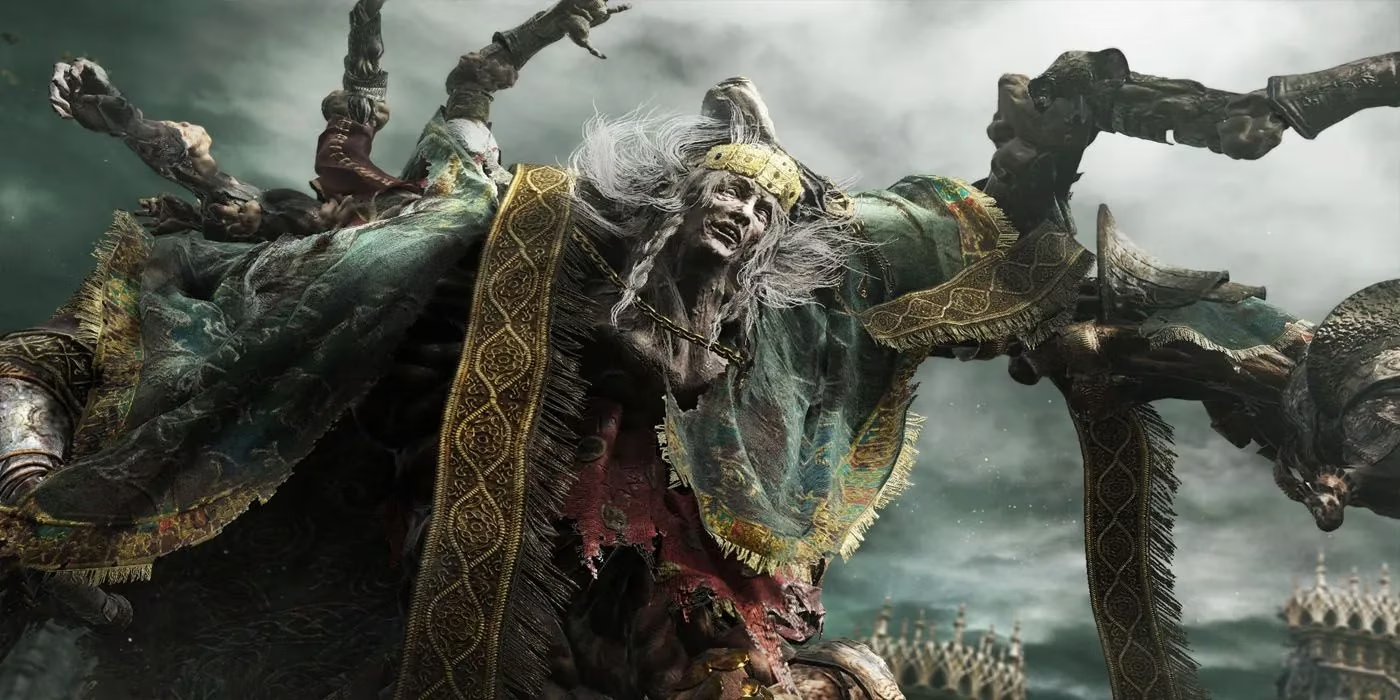
And honestly? That’s the most Soulsborne thing he could do. FromSoftware games have always thrived on mystery—fragmented lore, opaque mechanics, secret walls you discover by bonking them with a sword. So why would the studio’s philosophy on success be any different? Miyazaki once said, “I try not to think about it too much. Analyzing it deeply and consciously trying to replicate it would be a bad idea.” That’s not laziness; it’s a defiant act of creative preservation. Imagine if after Dark Souls, the team had tried to clone its exact formula—we’d never have gotten the aggressive ballet of Bloodborne or the prosthetic-arm playground of Sekiro. Analyzing a hit is like pinning a butterfly to a board: you might understand its wingspan, but you’ll never see it fly again.
The more I chew on Miyazaki’s stance, the more I see it as a rare shield against the industry’s obsession with focus-tested, sequel-milking safety nets. He doesn’t just avoid success formulas; he actively dodges fan feedback. In that same 2022 interview (which still gets meme’d to this day), he admitted he can’t be objective about his own work, so he stays away from critiques to keep his compass magnetic north rather than crowd-sourced. It reminds me of a gardener who refuses to stare at the blooms for too long, afraid his gaze might wilt them—a bizarre, almost superstitious humility that makes total poetic sense.
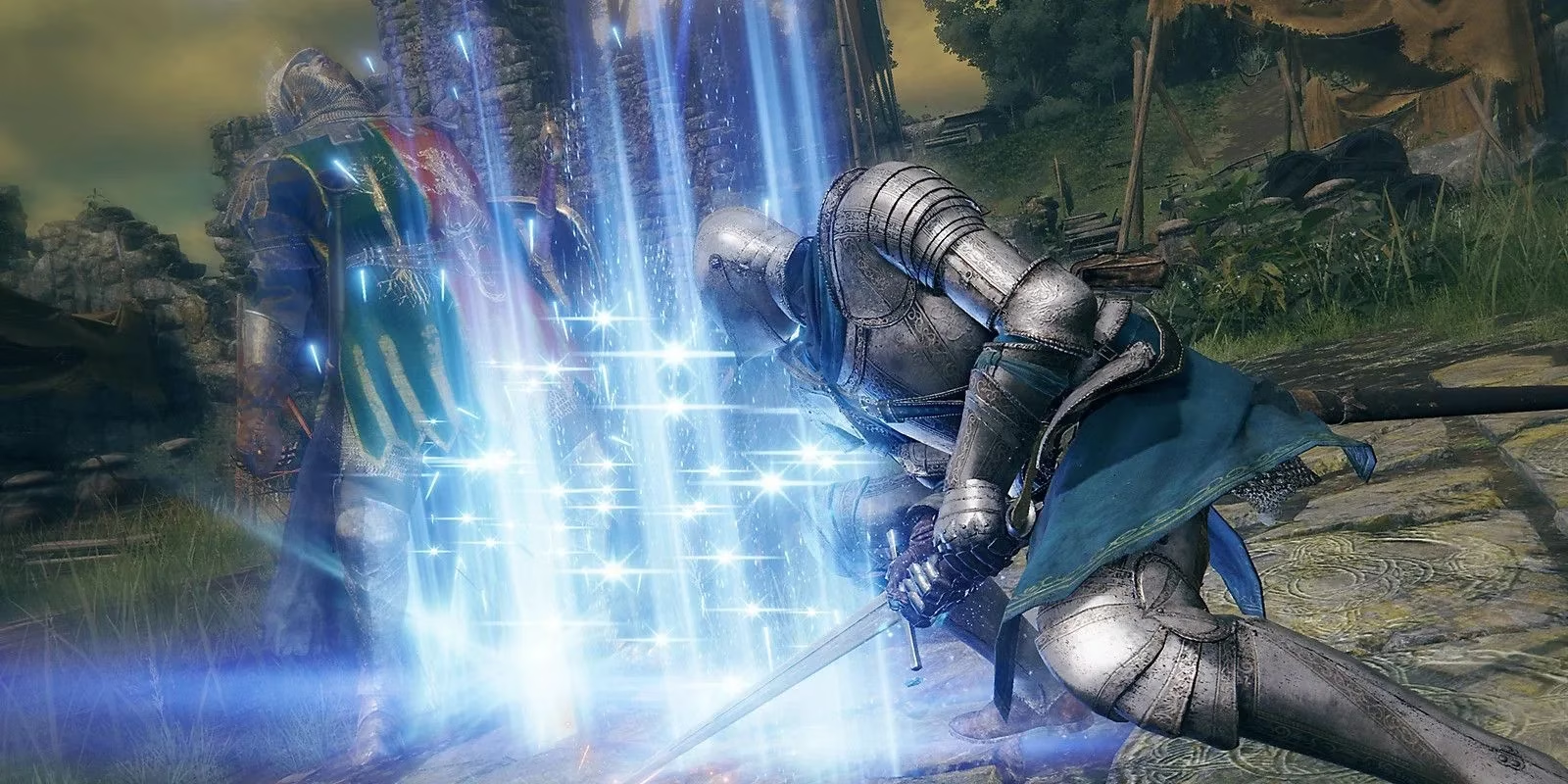
Let’s be real: in an era where every publisher demands a live-service roadmap and a battle pass before a game even releases, watching Miyazaki shrug off financial success is like spotting a unicorn in a spreadsheet factory. He’s openly grateful for new fans, saying that Elden Ring’s explosive community reminded him of when players first stumbled into Demon’s Souls—a raw, unpolished gem that lit the flame. But gratitude doesn’t mean he’ll chain himself to that success. The PS5 remake of Demon’s Souls inspired the team to polish Elden Ring’s graphics, sure, but they didn’t just slap a pretty coat on a safe formula. They built a whole world that eats you alive, and then they moved on.
This mindset might just be the bonfire that keeps FromSoftware’s future games from becoming hollow copies. Trying to bottle the lightning that struck Limgrave and sell it again? That’s how you end up with sequels that feel like fan fiction written by a committee. Miyazaki knows that what made Elden Ring special wasn’t a checklist—it was the alchemy of a team making something they themselves would want to get lost in. And you can’t replicate alchemy by copying the ingredients; you need to let the next explosion happen wherever it wants.
So as we sit here in 2026, with FromSoftware rumored to be cooking something entirely new (please be Bloodborne on PC, please), I find myself weirdly comforted by Miyazaki’s confusion. It means the next time we step into a fog gate, we won’t be walking through a tired template. We’ll be facing something that even its creator didn’t fully expect—a beautiful, terrifying question mark forged in the same fires of uncertainty that gave us the Lands Between. And if that next game flops? Well, at least it’ll flop honestly, not as a Frankenstein’s monster of analyzed success metrics. Until then, I’ll just trust the process, ignore the feedback, and keep swinging at suspicious walls. Miyazaki would probably approve.