
My Epic Journey Through Elden Ring's Most Unforgettable Bosses in 2026
Explore the harrowing and unforgettable Elden Ring bosses, from the grotesque Godskin Duo to the elegant Rennala, Queen of the Full Moon, as they test your sanity in this surrealist masterpiece.
As I, a humble Tarnished, reflect on my harrowing journey through the Lands Between in 2026, I realize that the bosses I faced were not just obstacles—they were living, breathing nightmares that carved their names into my very soul with blades of pure adrenaline and terror. These creatures, from the grotesquely beautiful to the cosmically horrifying, were more than mere video game enemies; they were hyperbolized caricatures of a broken world, each one a unique testament to FromSoftware's twisted genius. Fighting them felt less like playing a game and more like being thrown into a surrealist painting where every brushstroke was designed to test my sanity.
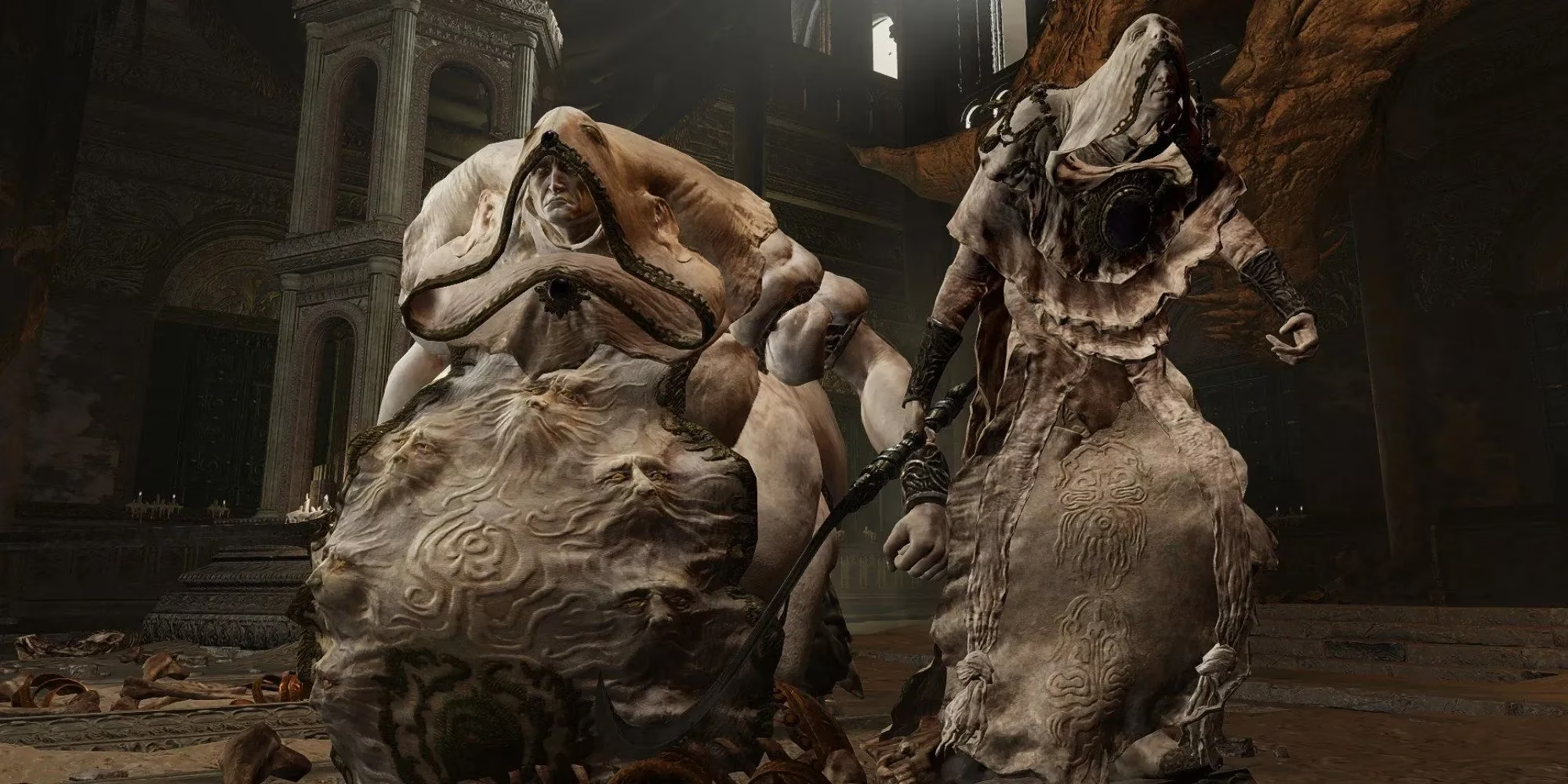
10. Godskin Duo: A Symphony of Shared Suffering
Let me tell you about the Godskin Duo. Forced into a bloody duel in the crumbling, time-warped ruins of Farum Azula, this pair of ghastly humanoids was like being trapped in a room with two vengeful opera singers who only knew how to scream in the key of death. They share a single health bar, a cruel mechanic that meant defeating one was as futile as trying to bail out a sinking ship with a teaspoon. The Apostle and the Noble would resurrect each other, their shared lifeforce pulsating like a grotesque, symbiotic heart. The arena became my only ally—a dance floor where missteps were punished with instant obliteration. Surviving them felt less like a victory and more like escaping a meticulously designed torture chamber.
9. Rennala, Queen of the Full Moon: A Bewitching Ballet
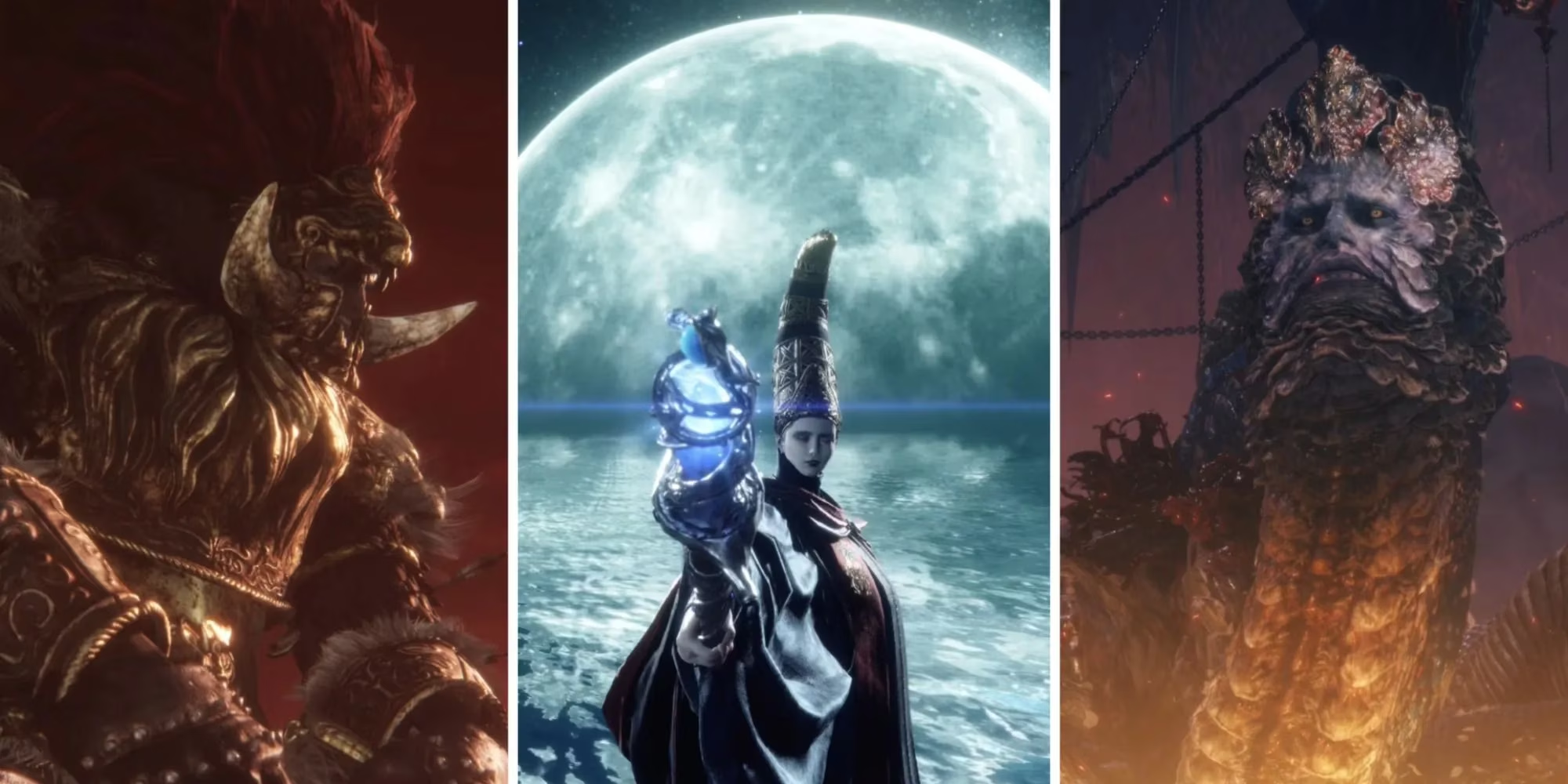
Ah, Rennala. The Queen of the Full Moon was a boss fight that felt like being invited to a beautiful, deadly masquerade ball hosted by a sorceress with severe mood swings. Her arena shift mid-battle was less a phase transition and more the universe itself deciding to redecorate while trying to kill me. With nearly twenty unique spells, she transformed the Library of Raya Lucaria into a kaleidoscope of magical devastation. Dodging her attacks required timing so precise it felt like trying to thread a needle during an earthquake. And just when I thought I could catch my breath and admire the ethereal full moon, she'd summon a miniature army to chase me down. She remains, to this day, the most elegant re-spec station I've ever had to fight for the privilege of using.
8. The God-Devouring Serpent & Rykard: A Tale of Two Terrors
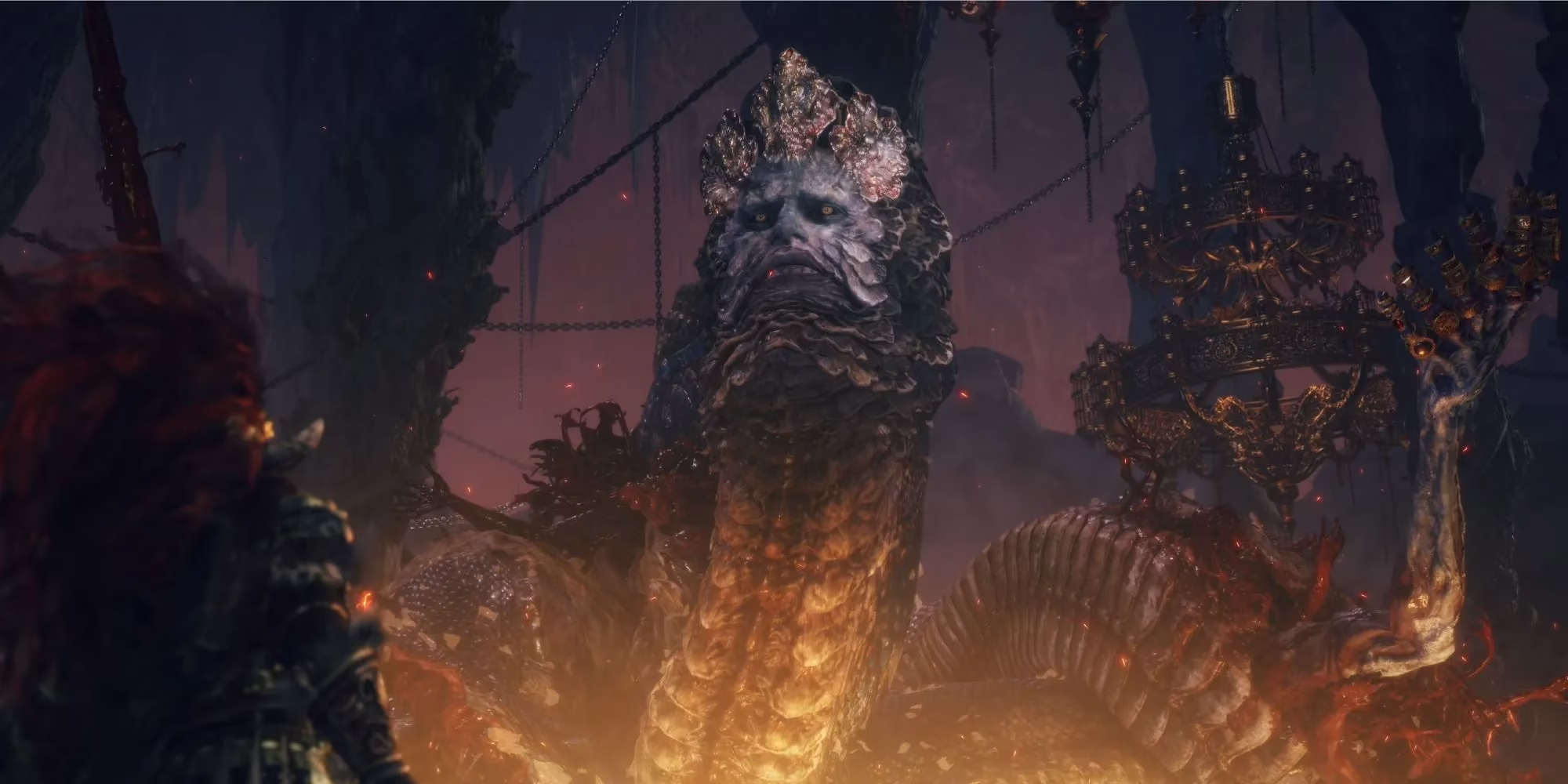
Then there was the horror show on Mt. Gelmir. The God-Devouring Serpent and its final form, Rykard, Lord of Blasphemy, were in a tight race for the title of 'Ugliest Being in Existence,' a competition as fierce as it was visually distressing. This fight was unique because it was a two-act play of pure disgust. First, I had to whittle down the serpent's massive health bar, a task as pleasant as wrestling a sentient fire hose made of scales and hatred. Only then would it undergo its unholy metamorphosis into Rykard, emerging with a fresh health bar and a renewed commitment to making my life a living hell. The entire experience was like watching a beautiful flower wilt and rot in fast-forward, only the flower was trying to eat me.
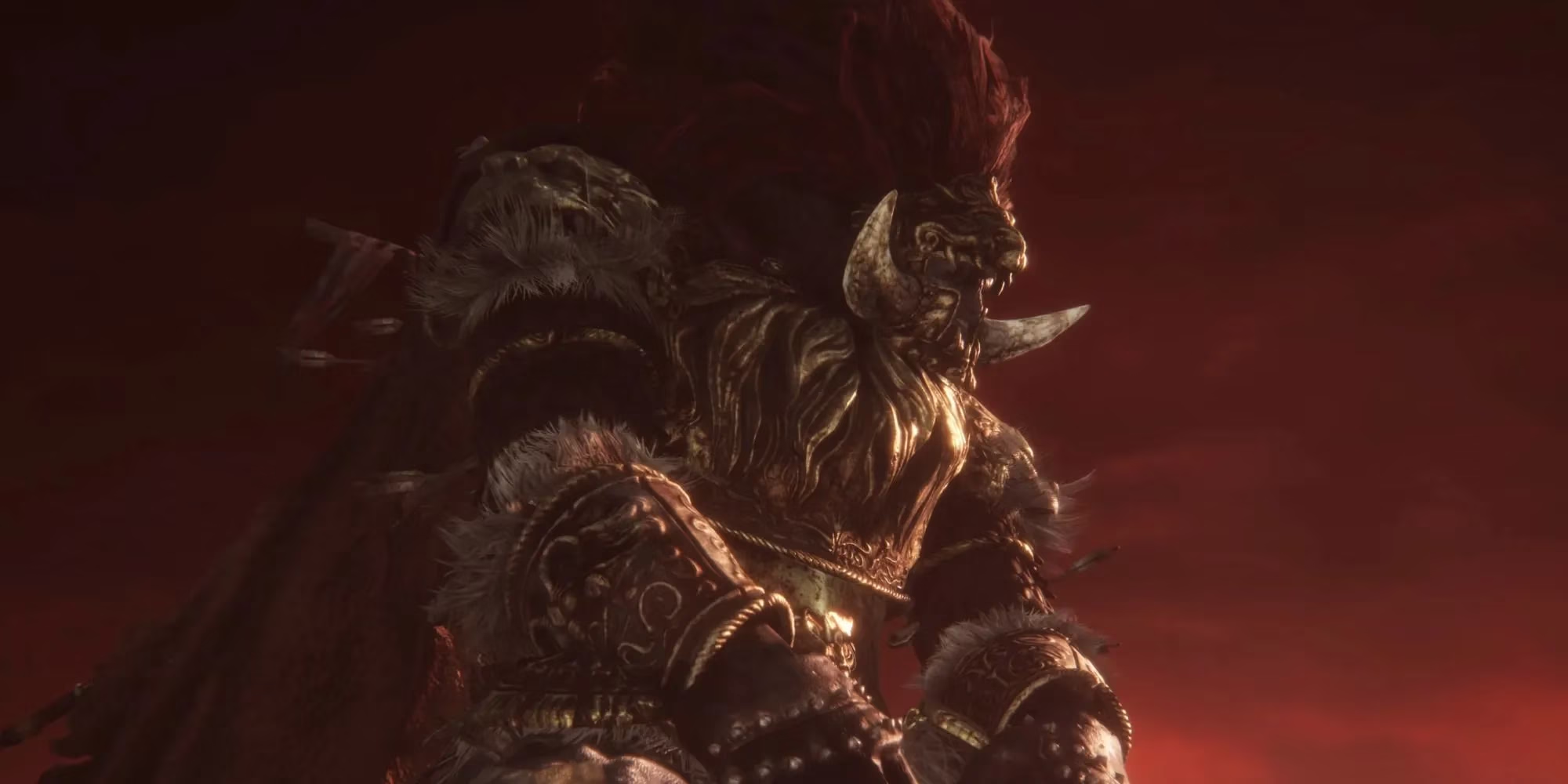
7. Starscourge Radahn: The Demigod of Disaster
Hidetaka Miyazaki's favorite, they said. A demigod so mighty he learned gravity magic just to keep his beloved horse from crumbling under his weight. Meeting Starscourge Radahn in the Scarlet Rot-blasted wastes of Caelid was like challenging a natural disaster to a duel. Perched behind Redmane Castle, he wasn't just a boss; he was an event. The festival atmosphere, the summons charging across the dunes—it felt like the climax of a saga, not a mid-game encounter. His arsenal was a complex cocktail of melee carnage, ranged artillery, and area-of-effect devastation. Beating him required not just skill, but a kind of frenzied, multi-tasking ballet, like juggling chainsaws while solving a complex equation. He was a force of nature contained in a demigod's broken body.
6. Inquisitor Ghiza: The Uninvited Dinner Guest
Inquisitor Ghiza's uniqueness is a matter of perspective. Is an invader a true boss? When that invader is a bloodthirsty maniac waiting in the dining hall of Volcano Manor with a spinning saw-blade the size of a wagon wheel, the answer is a resounding YES. This fight was a sudden, violent interruption—a jump scare with health bars. His weapon, Ghiza's Wheel, was the prize. Obtaining it felt like stealing a trophy from a lion's den. The sheer, visceral joy of activating its spin and watching it tear through enemies was worth the heart-pounding panic of the invasion. It was a brutal, intimate duel that proved sometimes the most unique threats aren't demigods, but very determined, very well-armed mortals.
5. Astel, Naturalborn of the Void: Cosmic Horror Personified
If Elden Ring had a 'Weirdness Leaderboard,' Astel would be the undefeated champion. This boss was the closest thing to fighting a bona fide alien lovecraftian nightmare that decided to stop by for a bite. Its arena, a star-studded void, was mesmerizingly beautiful, a stark contrast to the insectoid horror with a disturbingly human skull for a head that wanted to crush me into cosmic dust. The fight was a lesson in cosmic insignificance. Its massive pincers and teleporting grabs made it feel less like a battle and more like trying to swat a galactic mosquito that could phase through reality. Defeating Astel didn't feel like winning; it felt like surviving an encounter with something that fundamentally did not belong in my—or any—reality.
4. Regal Ancestor Spirit: A Mournful Waltz
The Regal Ancestor Spirit was a different beast entirely. This fight was not about frustration or terror, but about melancholic beauty. It was a somber, dance-like waltz in an ethereal, glowing forest. The haunting soundtrack and the spirit's graceful, almost mournful movements made this encounter feel sacred. It was a battle I almost didn't want to win. Defeating it felt less like a triumph and more like putting a majestic, suffering creature out of its misery. It was a poignant reminder that in a world defined by brutality, there could still be moments of profound, silent sorrow. This boss didn't test my reflexes; it tested my empathy.
3. Fire Giant: The Mountain That Fights Back
The Fire Giant was, in a word, colossal. Engaging him was like declaring war on a geography lesson. He was a late-game Radahn, but slower, tankier, and with a mean streak as wide as the Mountaintops of the Giants. The entire fight was an exercise in managing scale. I was an ant trying to topple a skyscraper. Hopping on Torrent was mandatory, not optional. His attacks in the second phase, especially when he tore off his own leg to use as a weapon, were spectacles of pure, unadulterated violence. Beating him was a war of attrition, a marathon where a single mistake meant being squashed under a flaming foot the size of a small house.
2. Valiant Gargoyles: A Test of Pure Patience
The Valiant Gargoyles. Just saying their name in 2026 still sends a shiver down my spine. This duo was the personification of 'unfair' in the most uniquely annoying way possible. Their immunity to status effects stripped away a core combat strategy, and their tag-team poison breath attack was like being gassed in a narrow alley. Individually, they were tough. Together, they were a meticulously coordinated headache. The fight was a long, grueling slog that felt less like a test of skill and more like a test of how much abuse my patience could absorb before snapping. They were the bureaucratic red tape of boss fights—a frustrating, unavoidable hurdle.
1. Mohg, Lord of Blood: The Tender Tyrant
And then, there was Mohg. Lurking in his blood-soaked palace beneath Caelid, Mohg, Lord of Blood, was the pinnacle of unique boss design. His pre-battle cutscene was a masterclass in unsettling atmosphere. The expectation was a demonic roar. What we got was a tender, almost loving voice as he caressed the cocoon of Miquella. This dissonance—this monstrous figure speaking with unsettling gentleness—added a layer of psychological horror that his spectacular blood magic only amplified. His arena, his theme, his tragic lore, and that voice created a package so uniquely disturbing and compelling that fighting him felt like intruding on a sacred, profane ritual. He wasn't just a boss; he was a character study in monstrous devotion, and defeating him was the chilling climax to one of the game's most hidden and horrifying narratives.
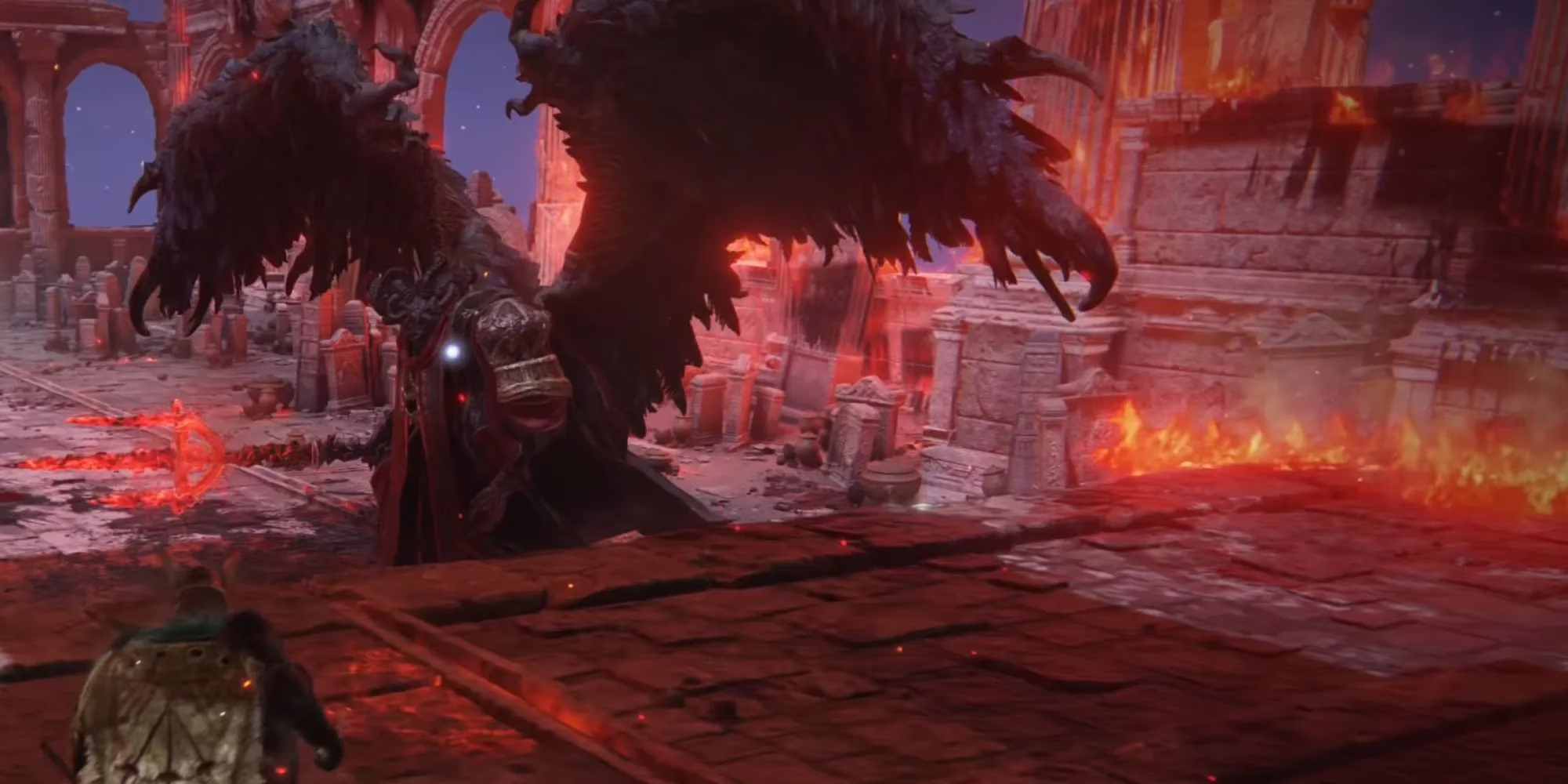
Looking back, these bosses were more than just pixels and code. They were experiences. They were the Godskin Duo's shared misery, a symbiotic nightmare as inescapable as a shared heartbeat. They were Astel, a cosmic anomaly as out of place as a supernova in a teacup. And they were Mohg, whose tender voice was as jarring as a lullaby sung in a slaughterhouse. In 2026, Elden Ring's legacy isn't just its open world, but these unforgettable titans who taught me that true victory isn't about never falling, but about always getting back up, no matter how many times a giant steps on you or a cosmic bug tries to eat your soul.