
The Iterative Mastery Behind Elden Ring and Baldur's Gate 3's Monumental Success
Elden Ring and Baldur's Gate 3's monumental success exemplifies the transformative power of iterative mastery and audience cultivation in game development. These genre-defining hits were not accidents but the culmination of decades of deliberate refinement and unwavering creative vision.
In the gaming landscape of 2026, the monumental success of titles like Elden Ring and Baldur's Gate 3 continues to be analyzed not as fleeting anomalies, but as the culminations of a deliberate, long-term creative philosophy. Like master artisans gradually revealing the final form of a sculpture hidden within a block of marble, studios such as FromSoftware and Larian have demonstrated that achieving a genre-defining hit is rarely a first attempt. It is the result of years, sometimes decades, of iterative refinement, audience cultivation, and unwavering focus on a core creative vision. These games didn't simply capture lightning in a bottle; they built the bottle over many years, patiently waiting for the perfect storm.

At the heart of both triumphs lies the principle of iterative mastery. FromSoftware's journey can be traced back to 2009's Demon's Souls. From that foundational title, the studio embarked on a relentless quest to polish and expand its signature formula through Dark Souls, Dark Souls 2, Bloodborne, Dark Souls 3, and Sekiro: Shadows Die Twice. Each release was not a reinvention but a focused evolution—an experiment in setting, pace, and mechanics built upon a rock-solid core of challenging combat, intricate world design, and environmental storytelling. This process was akin to a master blacksmith repeatedly folding steel; with each iteration, the material became stronger, more refined, and capable of holding a sharper edge. By the time Elden Ring arrived, the studio had over a decade of concentrated expertise to pour into an open-world format, resulting in a title that achieved "Call of Duty-sized numbers" and captivated a mainstream audience far beyond its established, evangelical fanbase.
Larian Studios followed a remarkably parallel path. Since the early 2000s with Divine Divinity, the studio has been honing its craft in the isometric RPG space. The Divinity series, culminating in the critically adored Divinity: Original Sin 2 in 2017, served as a decades-long training ground. Here, Larian perfected systems of deep character interaction, reactive worlds, and turn-based tactical combat. Developing Baldur's Gate 3 was less a risky leap into the unknown and more a confident stride onto a stage they had been meticulously constructing for years. The game's achievement of peaking at over 814,666 concurrent players on Steam stands as a testament to this long-term preparation. It was the studio finally being handed the keys to a beloved universe (Dungeons & Dragons) with the technical and creative toolkit fully assembled and masterfully calibrated.
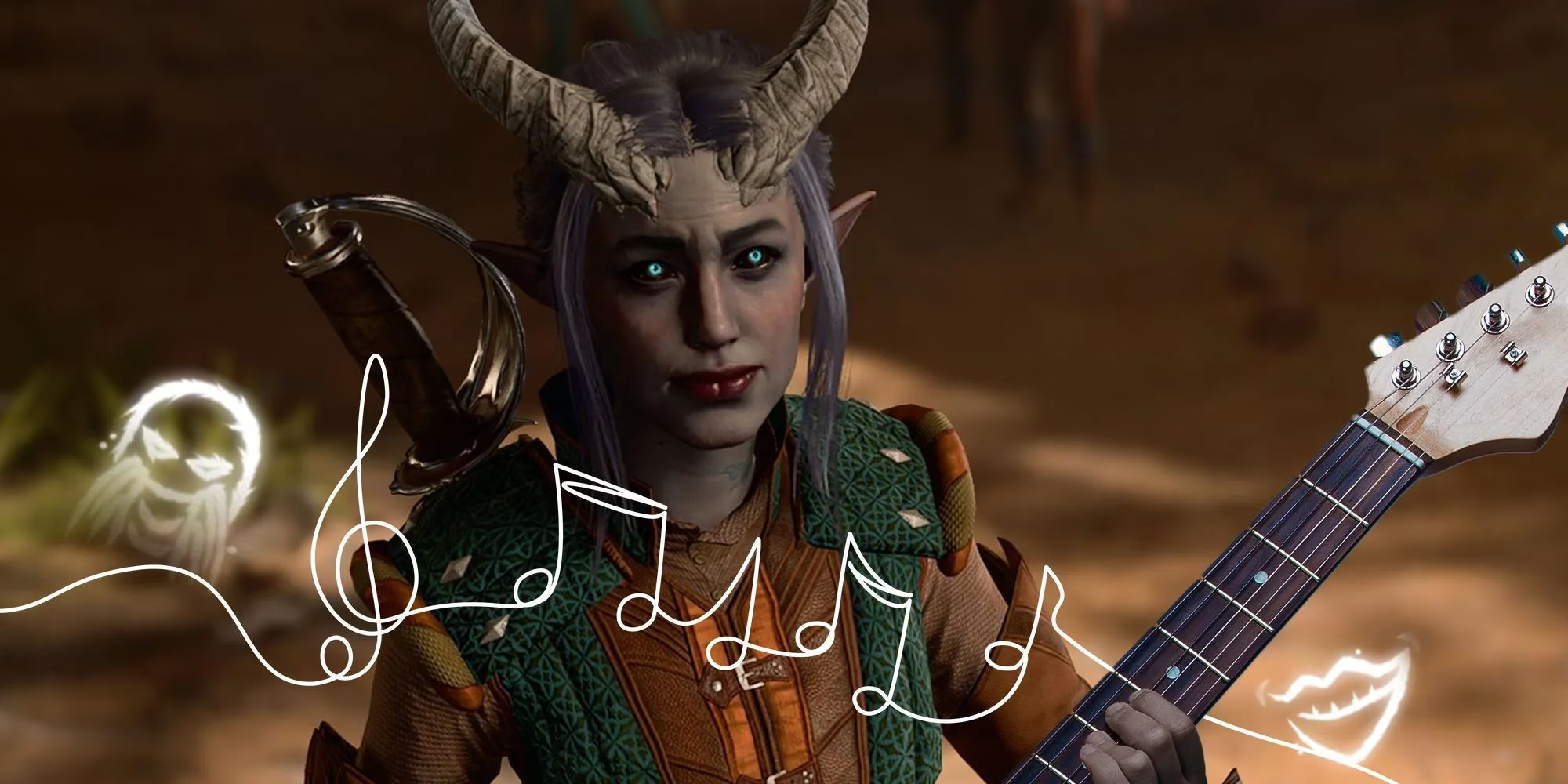
This iterative process does more than just sharpen a studio's technical skills; it performs the crucial, slow-burn work of audience cultivation. A successful game franchise builds its audience like a coral reef grows—layer by patient layer, attracting and sustaining a dedicated ecosystem. Demon's Souls cultivated a small, passionate following. That audience, though niche, was evangelical, spreading the word and creating a foundational community. Players who found the challenge daunting had years between releases to hear testimonials, watch guides, and develop a curiosity strong enough to overcome initial frustration. By the time Dark Souls or Divinity: Original Sin sequels arrived, a larger, more prepared audience was ready to engage. This created a virtuous cycle: commercial success from a refined sequel funded more ambitious projects, which in turn attracted even more players. The launch of Elden Ring and Baldur's Gate 3 represented the moment these carefully nurtured reefs broke the surface, becoming vast, visible landmasses that everyone wanted to explore.
Beyond their developmental DNA, these two titans share significant philosophical and design commonalities that resonate deeply with modern players:
-
Commitment to Single-Player Depth: In an era often sidetracked by games-as-a-service models, both titles are unapologetically dense, single-player-focused experiences. They offer complete, microtransaction-free worlds that value player agency and discovery over perpetual monetization.
-
Systemic Richness and Challenge: Both games are famously challenging and long, demanding engagement with their deep, interlocking systems. They respect the player's intelligence and reward perseverance, a stark contrast to more hand-holding design trends.
-
Fantasy World-Building: As fantasy RPGs, they offer vast, immersive worlds to get lost in—Elden Ring with its haunting, fragmented Lands Between, and Baldur's Gate 3 with the rich, choice-driven tapestry of the Forgotten Realms.
-
Unobtrusive Multiplayer: While primarily solo adventures, both incorporate thoughtful, optional multiplayer components that enhance rather than dictate the experience.
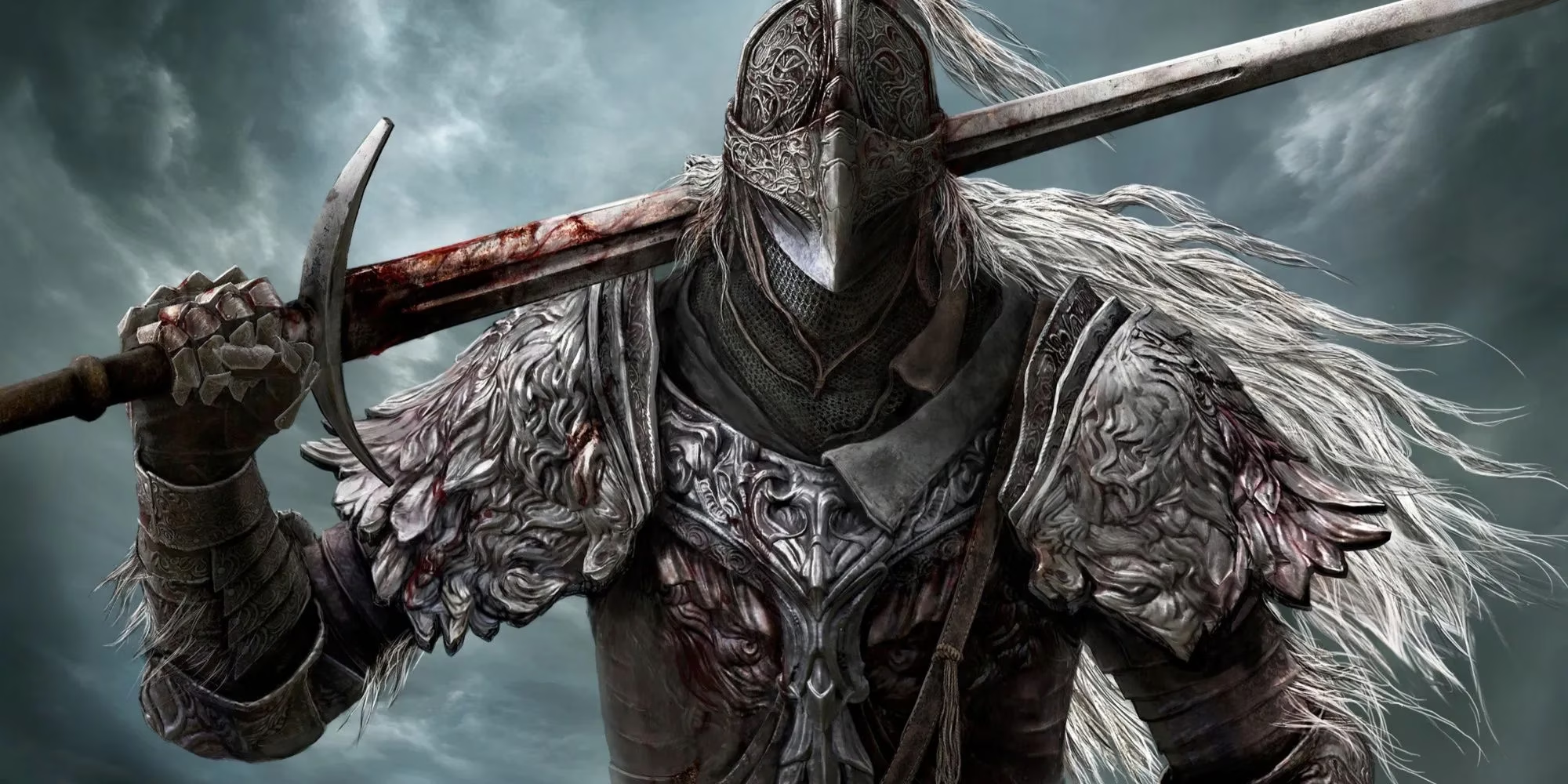
Ultimately, the legacy of Elden Ring and Baldur's Gate 3 in 2026 is that of validation. They prove that in a fast-paced industry, there is immense value in the slow, deliberate craft of iteration. They stand as monolithic achievements, not because they changed everything, but because their creators spent years mastering something—a specific feel, a complex system, a relationship with an audience. Like a master chef who has perfected a signature dish over a lifetime, these studios served a masterpiece that could only exist after countless previous attempts, adjustments, and learned lessons. Their success is a powerful reminder that true, culture-shifting excellence is often not a sudden explosion, but the brilliant, final flash of a fuse that was lit many years prior.