
The Poetic Dance of Death: My Journey Through Games Where Dying Teaches You How to Truly Live
Discover the transformative power of video games like Life Goes On and Hades, where death is not an ending but a profound teacher in resilience and self-improvement. Explore how these digital crucibles turn failure into victory, offering lessons in persistence and narrative depth.
From the ashes of a thousand failures, I find the ember of victory. The year is 2026, and as I look back on my digital odyssey, I realize that the truest lessons in resilience were not found in easy triumphs, but in the spaces between 'You Died' screens. These are not merely games; they are crucibles where my spirit was tempered, where each pixelated demise was a whisper to try again, to git gud. I’ve learned to embrace the loop, for in these worlds, death is not an ending, but a teacher, a mechanic, a narrative heartbeat. It’s a helluva journey, and I’m here to tell you about it.
10. Life Goes On: A Chivalrous Pile of Lessons
Let’s kick things off with a wacky, poetic paradox. Life Goes On is where gallantry meets gallows humor. My quest wasn't for glory, but for a pile of corpses. As a disposable knight, my sole purpose was to die creatively—to impale myself on spikes, to be crushed by gears—so that the next brave soul in line could use my cold, armored body as a stepping stone.
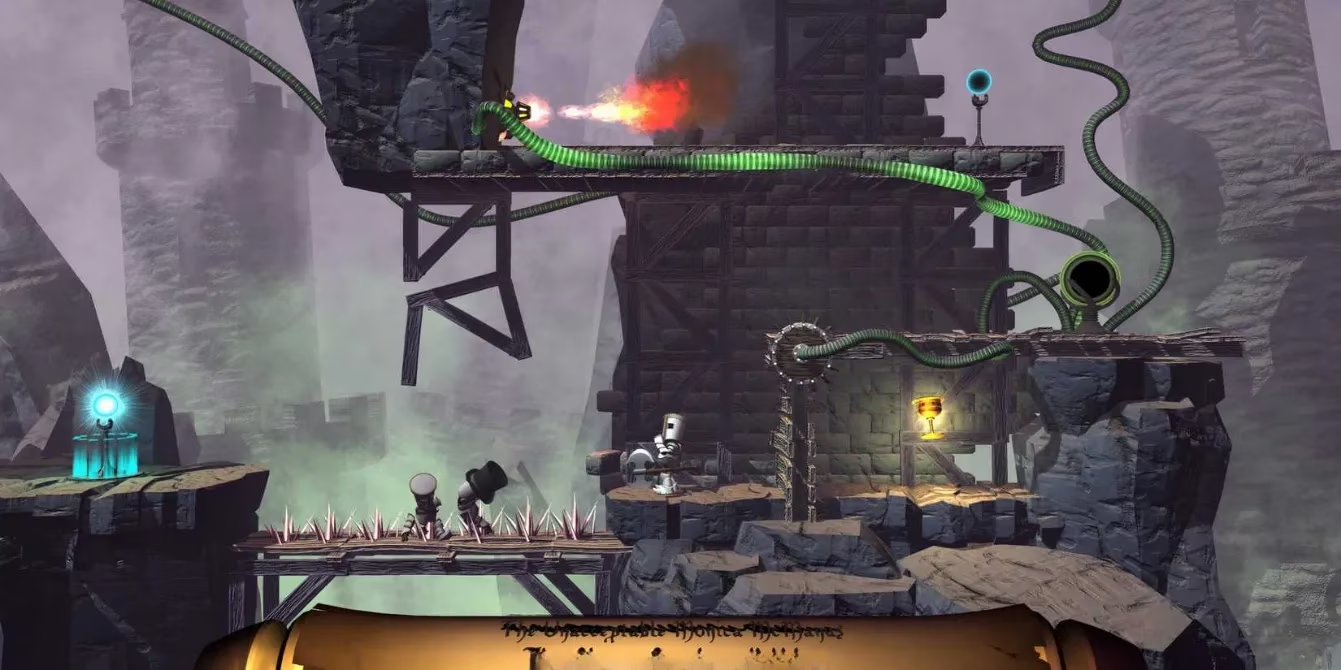
The goal? A cup of eternal life for a lord I’d never meet. The irony wasn't lost on me. The game rewarded efficiency—the fewer knights sacrificed, the greater the honor. It taught me that sometimes, progress is built on the bones of your past selves. It was absurd, hilarious, and strangely profound. A real 'what doesn't kill you makes a better platform' situation.
9. Hades: A Family Affair in the Underworld
Ah, Hades. My home away from home. Playing as Zagreus, the rebellious son, my escape attempts from the Greek underworld were less of a breakout and more of a brutal family therapy session. Each run was a conversation with my dysfunctional divine relatives. Zeus would offer a boon, Poseidon a blessing, and my dear old dad, Hades, would just try to smash me into a pulp.
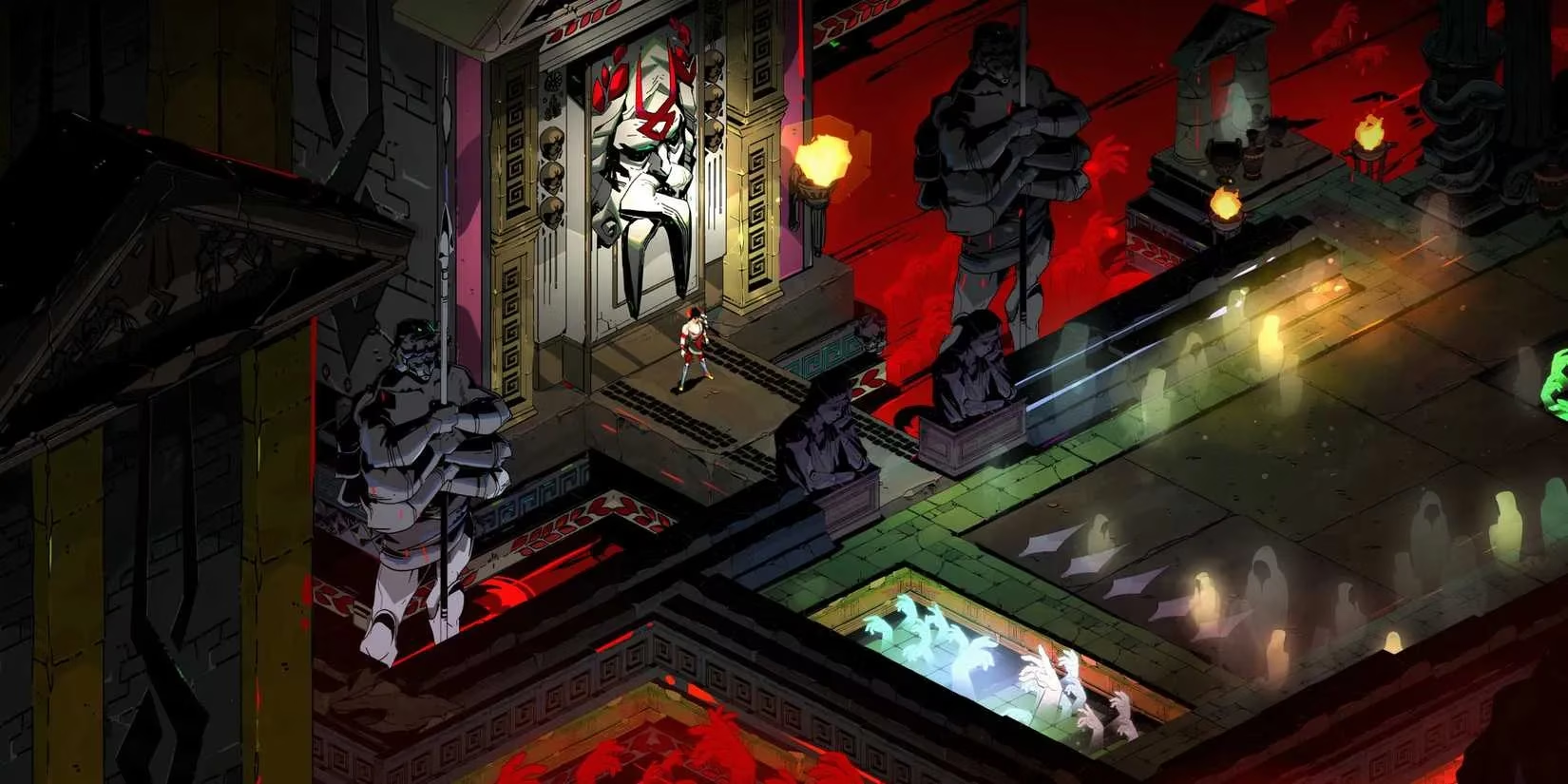
Death here was a homecoming. I’d wash up in the Pool of Styx, lose my coins, but keep the precious Darkness and Keys—the metaphysical currency of self-improvement. The hack-and-slash combat was a ballet of death, and the story unfurled with each return. Dying never felt like a failure; it felt like advancing the plot. It was the ultimate 'sneakin' out' fantasy, where every failure brought me closer to understanding my family, and myself.
8. Outer Wilds: The Cosmic Truth in 22 Minutes
Outer Wilds is poetry in motion, a elegy written across a solar system. Every 22 minutes, the sun goes supernova, and I, the intrepid astronaut, am reset. Knowledge was my only persistent currency. I learned that death was the key to the universe.
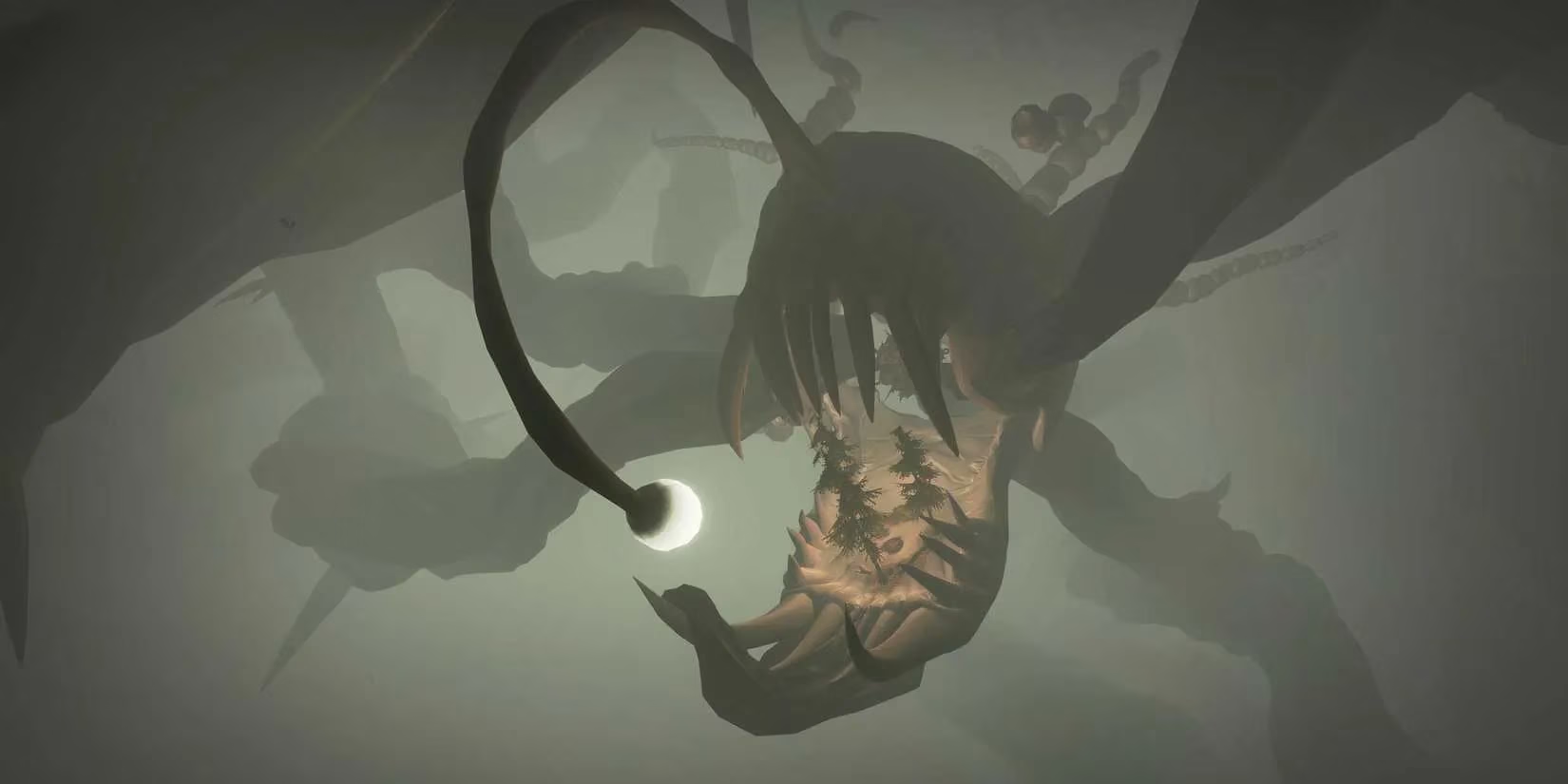
I’d fly my rickety ship into a black hole, get swallowed by anglerfish in dark brambles, or simply run out of time gazing at the stars. Each death wasn't a setback; it was a new piece of the puzzle. The more I died, the more I understood the tragic, beautiful loop the Nomai were trapped in. By 2026, its message feels more poignant than ever: our time is limited, so seek understanding, not just survival. It’s a game that makes you feel small, and in that smallness, find something infinite.
7. Sifu: The Aging Art of Vengeance
Sifu is where my quest for vengeance literally aged me. Starting at 20, each death added years to my life. A death counter wasn't just a number; it was my mortality staring back at me. By the time I faced the fourth boss, I was a 68-year-old master, my reflexes not what they used to be.
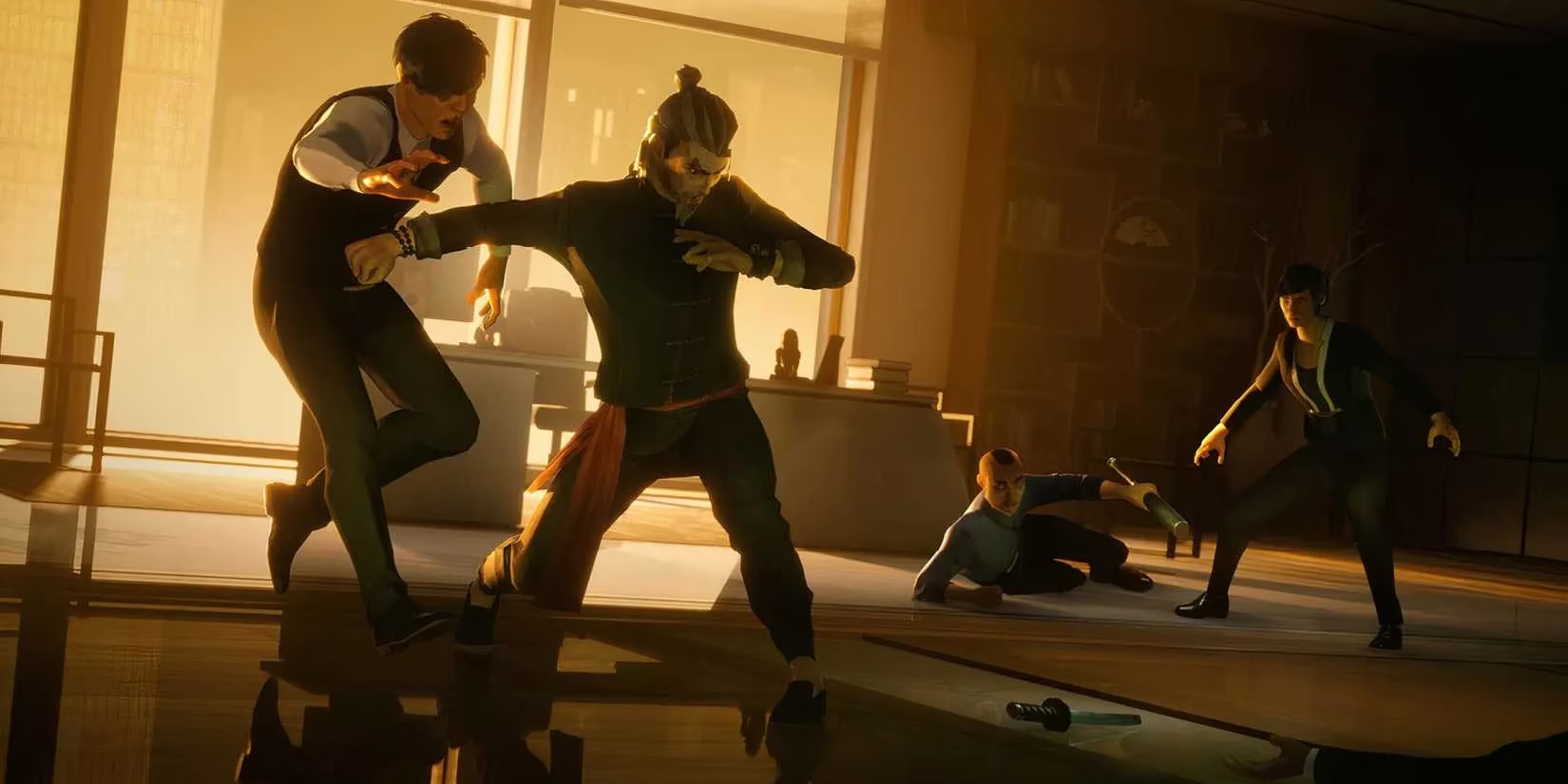
The kung-fu was fluid, a dance of parries, dodges, and bone-crunching combos. But one mistake, and time marched on. It forced me to be precise, to master the flow. The aging mechanic was a brutal, brilliant metaphor: revenge consumes your life. You could finish the game young and skilled, or old and weary, but you would finish it, shaped by every blow taken and given.
6. Middle-earth: Shadow of War: The Nemesis That Never Forgets
This game personalizes failure like no other. WB’s Nemesis System meant that the Orc captain I barely managed to kill last week? He’d come back. With a mechanical arm, a nasty scar, and a serious grudge. He’d mock me for our last fight, and if he killed me, he’d get promoted, stronger, more arrogant.
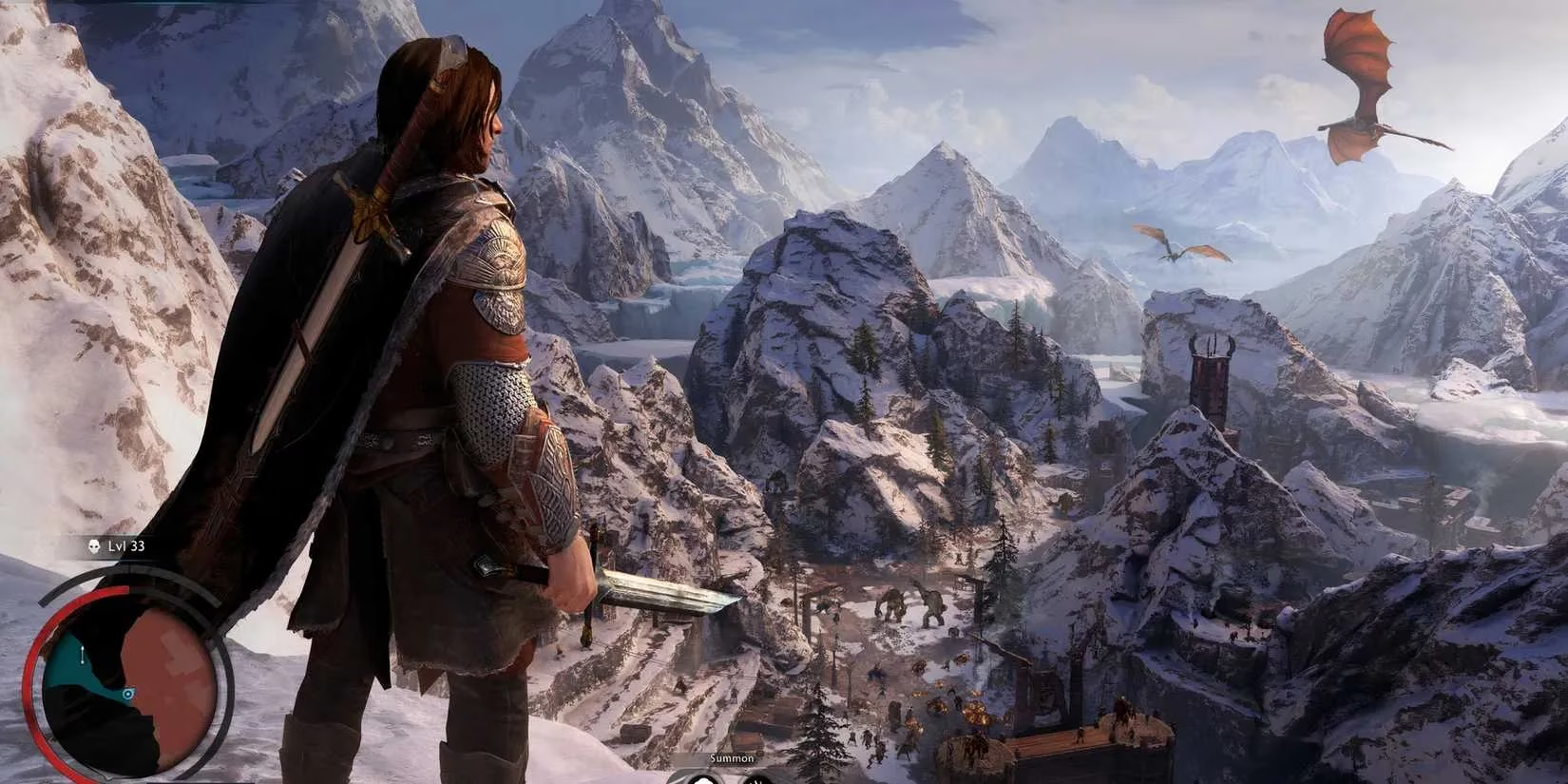
Death created stories. It built rivalries that felt personal. My failures had faces and names, and my eventual victories were all the sweeter for it. It taught me that in a dynamic world, there are no bygones. Every action, especially failure, has a consequence that evolves. It was a living, breathing world of vendettas.
5. Super Meat Boy: The Simplistic Symphony of Suffering
Two buttons. Run and jump. That’s all Super Meat Boy gives you. And with them, it conducted a symphony of my suffering. The levels are short, brutal, and demand pixel-perfect precision. My death counter soared into the thousands overnight. This game is the definition of 'tough love'.
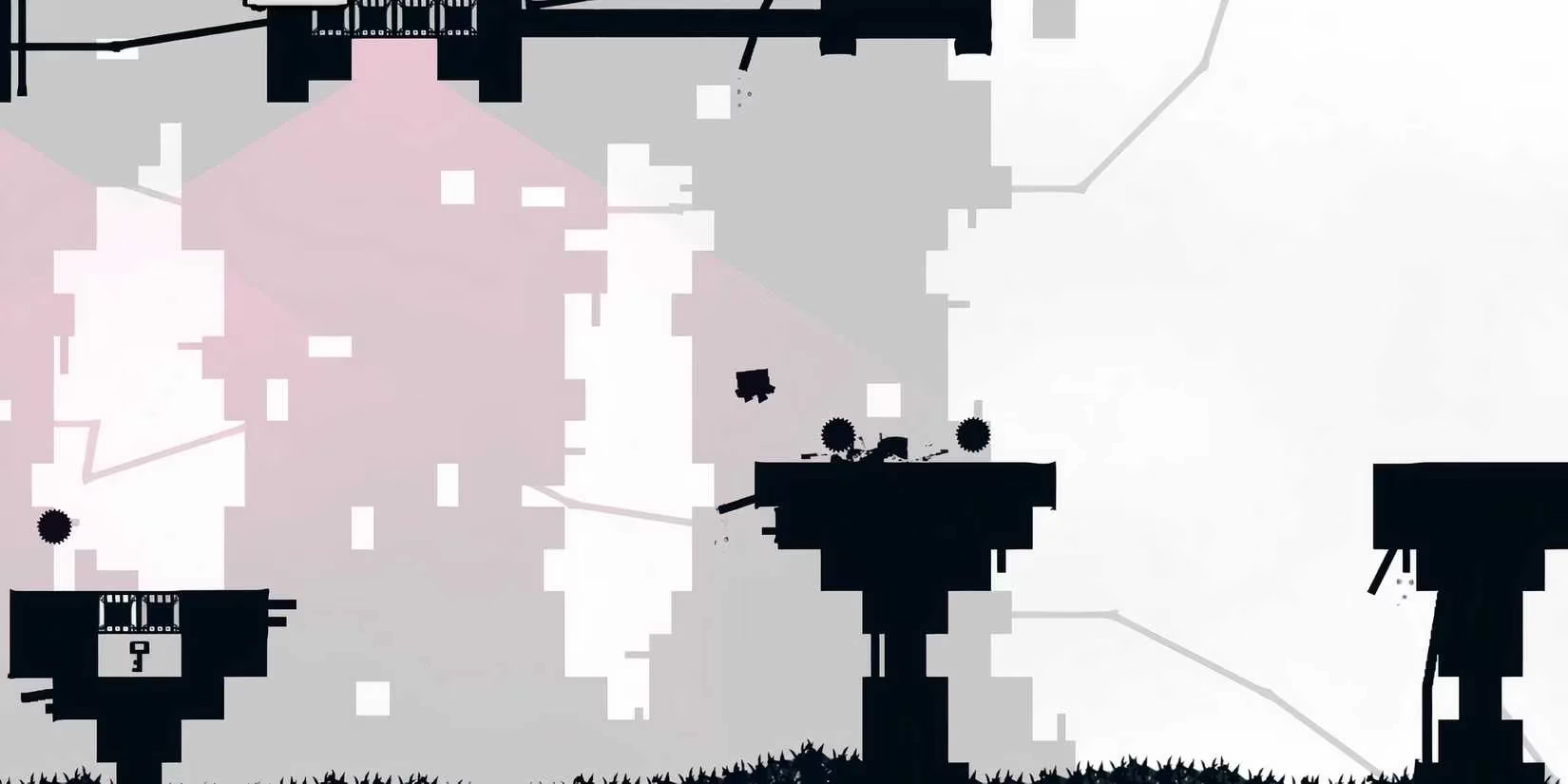
There are no tutorials, only visual language. See a saw blade? Don’t touch it. See a gap? Gauge your jump. It’s pure, unfiltered trial and error. But the respawn is instant, and the satisfaction of finally nailing a sequence after 50 attempts is a drug. It’s a game that makes you feel the learning curve in your fingertips.
4. Kenshi: Zero to Hero in a World That Hates You
Kenshi is a sandbox of suffering. You start as a nobody—stats at rock bottom—in a desert wasteland where everything, from starving bandits to giant beak-things, wants you dead. I’m not kidding, a goat could probably end you in the early days. There is no quest marker, no destiny. You just... exist.
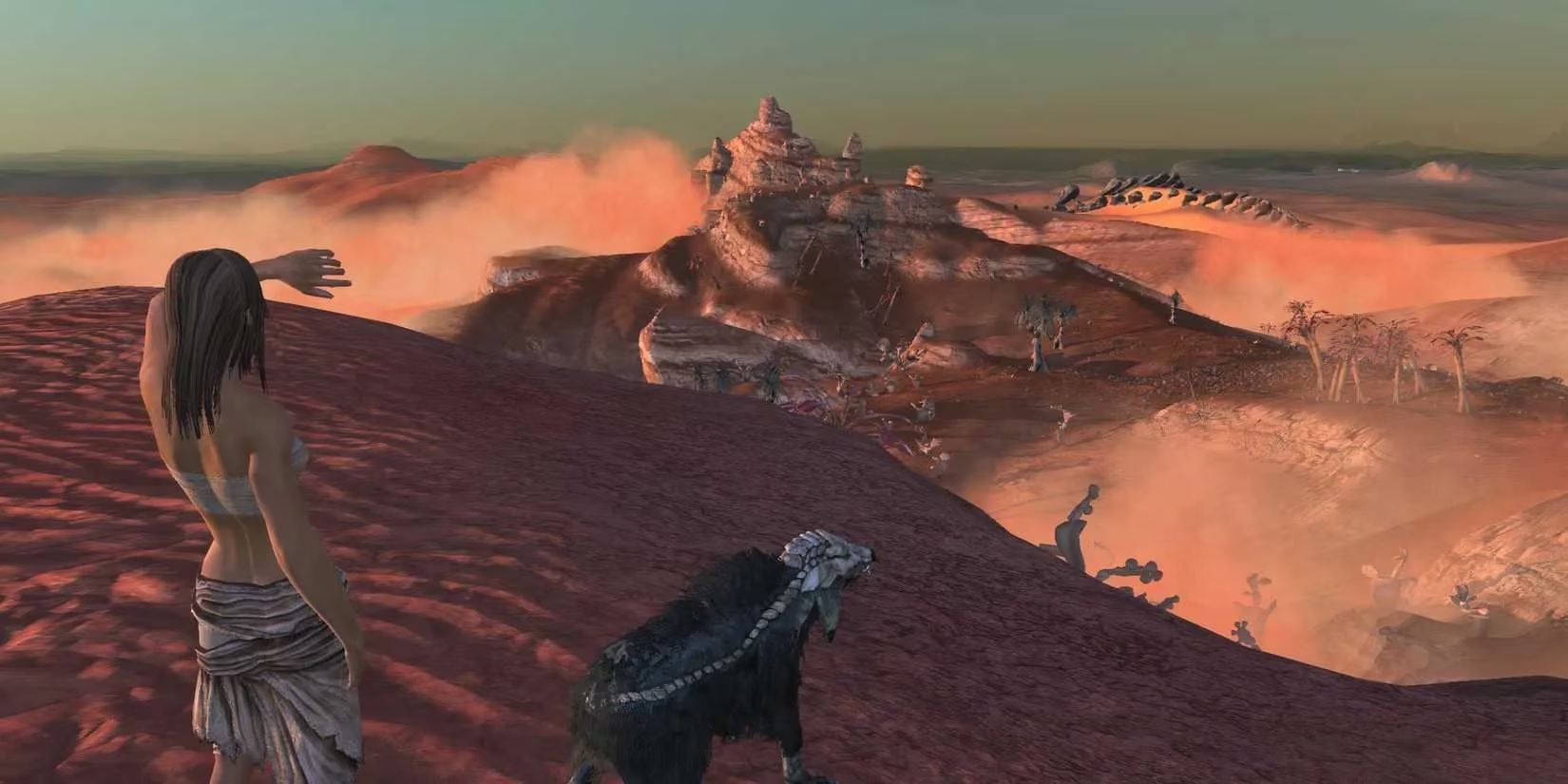
Death, or more often, being beaten into a pulp and left for dead, is the core curriculum. You get stronger by getting the snot beaten out of you. You build a town, it gets raided. You recruit an army, they get eaten. It’s Dune without the royal treatment. The freedom is absolute, and the punishment for overconfidence is swift and humbling. Survival itself is the victory.
3. Noita: Every Pixel is Out to Get You
The tagline says it all: Everything Kills You. Noita is a rogue-lite where the world itself is a physics-based deathtrap. Every pixel of water, lava, acid, or weird fungal growth is simulated. My own spells could, and often did, set me on fire, electrocute me, or summon something horrific.
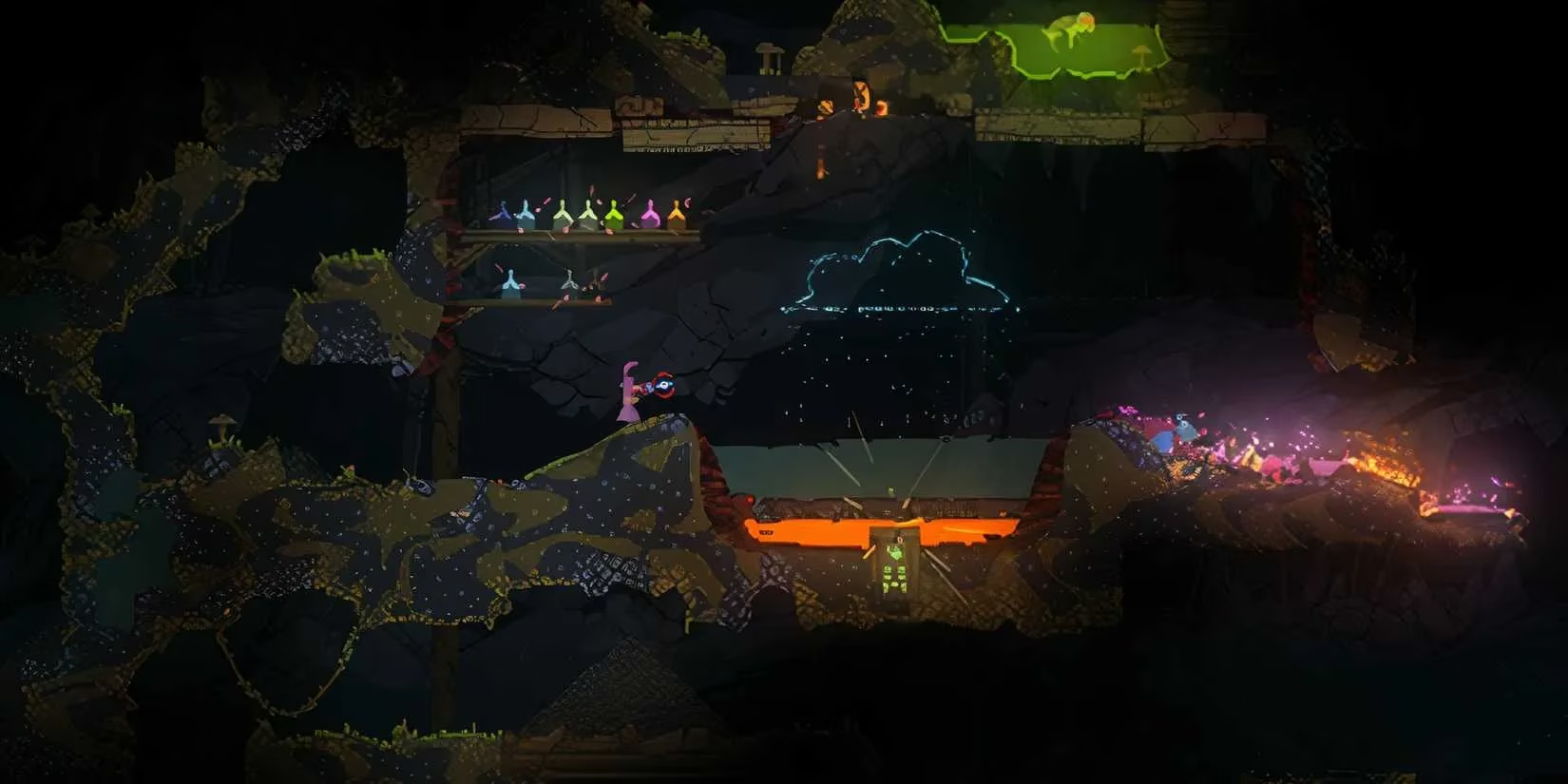
Progress is a cycle of experimentation and catastrophic failure. You descend through biomes, die to something baffling, and start over, a little wiser. The learning curve is a cliff, but once you start understanding the alchemy of its world—how to mix spells, manipulate materials—the power fantasy is unparalleled. Death is the cost of tuition in the world’s most dangerous magic school.
2. Elden Ring: Perishing Gloriously in the Lands Between
FromSoftware’s magnum opus. Elden Ring took the punishing ethos of Soulsborne and painted it across a breathtaking, terrifying open world. The list of things that have killed me is longer than some novels: a random soldier, a giant crab, a rune bear, and of course, Malenia, Blade of Miquella (a million times over).
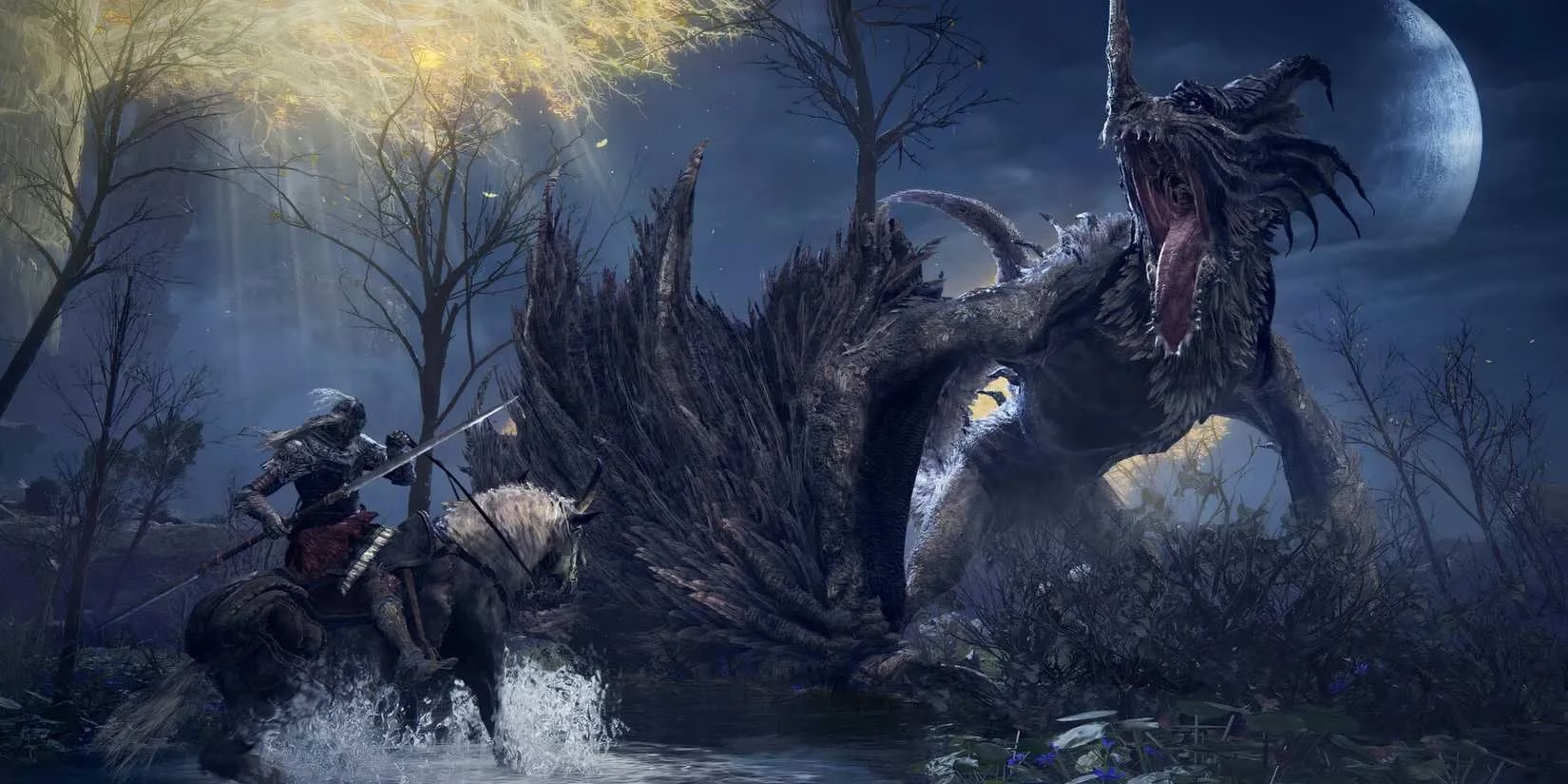
But here’s the beauty: it gives you tools. If a boss is too tough, you can explore, level up, find a powerful spell or summon. The death is a lesson: 'You are not ready for this area. Go elsewhere, grow stronger.' By 2026, its world is still being explored, secrets still found. The community’s shared struggle against its challenges creates a unique bond. Beating a boss after countless attempts? That feeling is pure, unadulterated ecstasy. It’s the 'let’s go!' moment that makes all the pain worth it.
1. Sekiro: Shadows Die Twice: The Unforgiving Dance of the Katana
And here we are. The pinnacle. The crucible. For me, Sekiro stands above even Elden Ring in its cruel, beautiful purity. There is no grinding to overlevel. No summoning help. It’s just you, Wolf, your katana, and your prosthetic arm against the world.
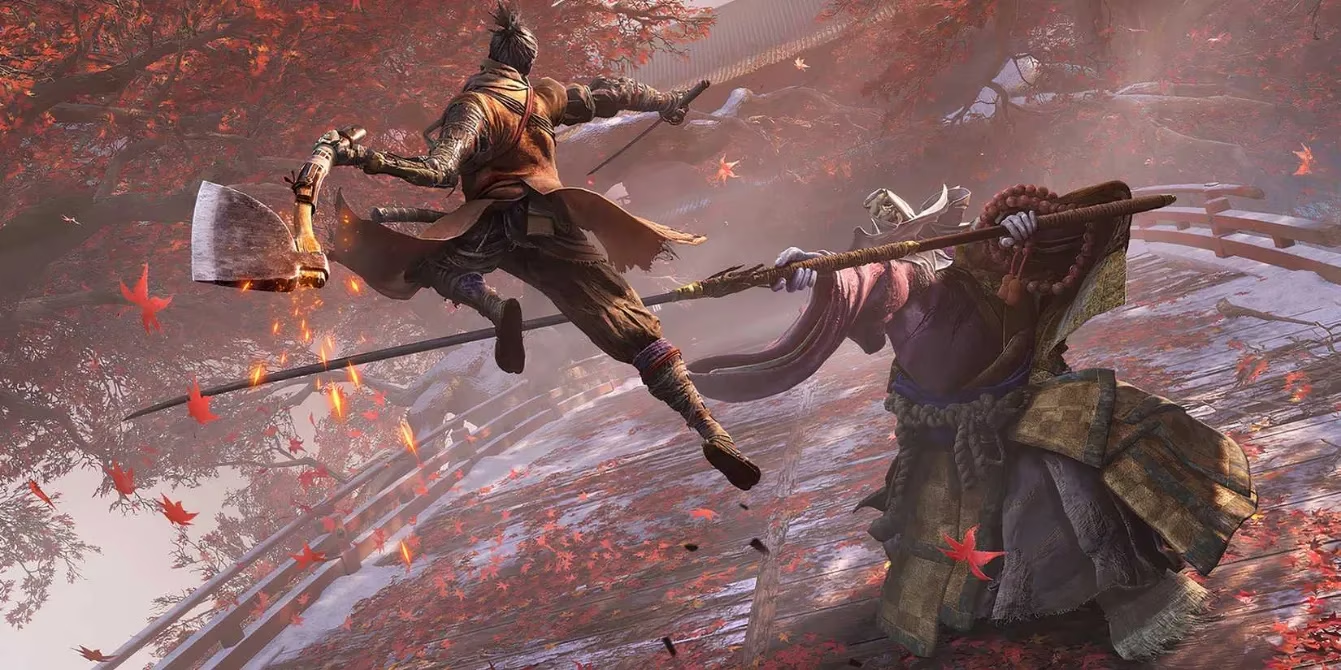
The combat is a rhythmic duel of clashing steel. Deflect, attack, posture break, deathblow. A mistimed button means death. It demands absolute mastery. I have screamed, I have almost cried, I have felt my hands shake with adrenaline. But the moment it clicks—when you finally dance the dance perfectly and see 'Shinobi Execution' flash on screen—is a transcendental gaming moment. It is the ultimate test of 'git gud.' It doesn’t just want you to win; it demands you become a master. And in 2026, that lesson in unwavering focus and perseverance stays with me, long after the controller is set down.
So here’s my take, my fellow players. In these digital realms, we don’t fear the 'Game Over.' We lean into it. We learn its patterns, we respect its rules, and we rise again, smarter, tougher, more determined. These games are the antithesis of hand-holding; they are challenges that whisper, 'You can do better.' And when you finally do, the victory isn't just on the screen—it’s in your soul. Now, if you’ll excuse me, I think I hear a boss calling my name... again. 😉