
The Tiny Titans of FromSoftware: How 300 Devs Crafted Elden Ring and Armored Core 6
FromSoftware's agile team of 300 developers masterfully crafted Elden Ring and Armored Core 6, showcasing efficiency and creative brilliance.
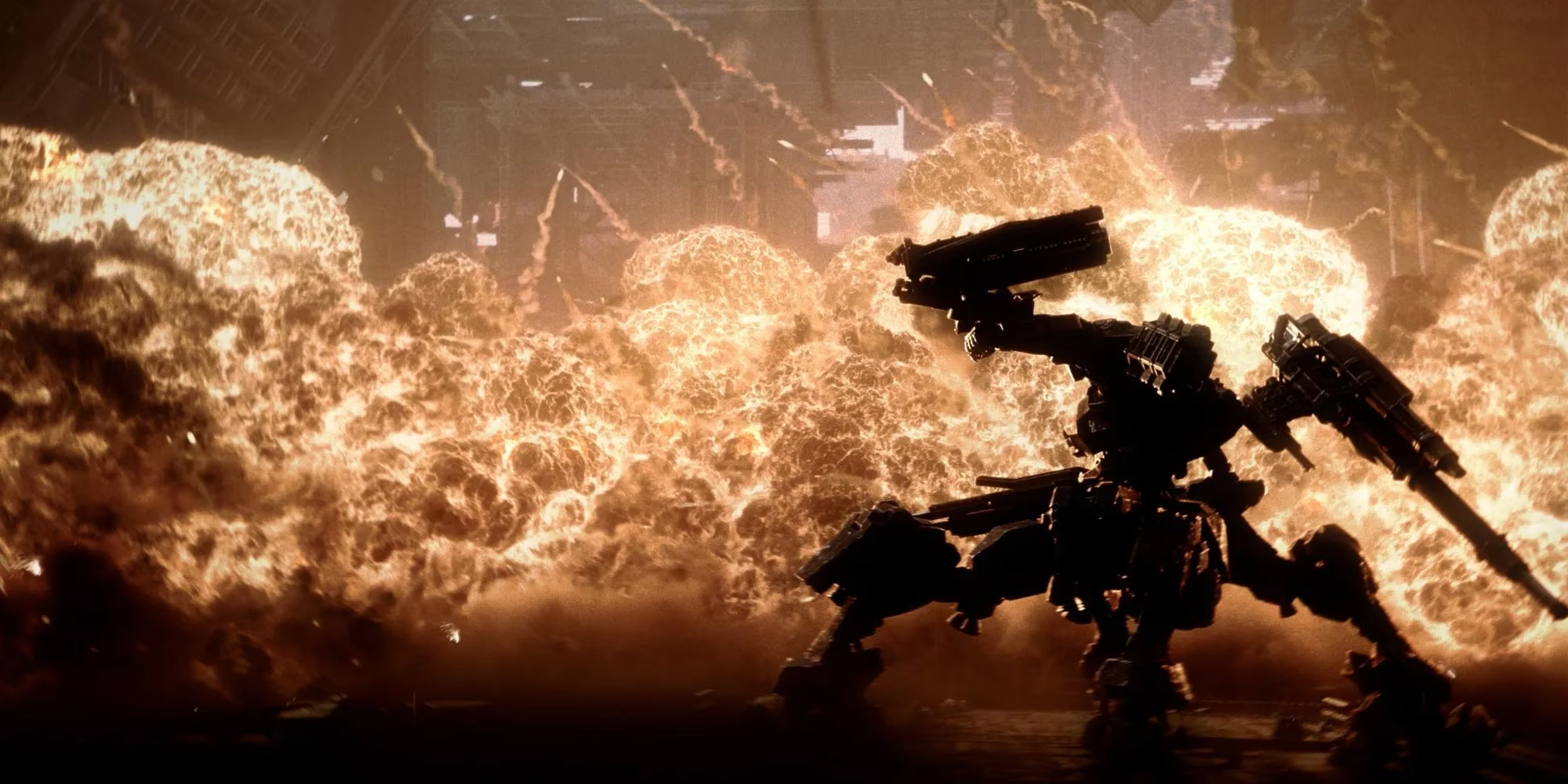
In the colossal world of triple-A game development, where studios often swell to thousands of employees, one name consistently delivers masterpieces with a team size that would make other publishers blush. FromSoftware, the revered architects of desolate, beautiful worlds, operates with a crew so lean it's almost unbelievable. Picture this: while other studios are throwing armies at a single project, FromSoftware had roughly 300 developers juggling the monumental tasks of finishing Elden Ring and birthing Armored Core 6: Fires of Rubicon simultaneously. How on Rubicon (or in The Lands Between) did they pull that off?
The Fluid 300: A Development Ballet 🩰
The secret sauce isn't magic, but a highly efficient, fluid staffing model. In a revealing interview, producer Yasunori Ogura laid out the numbers: FromSoftware has about 400 total employees, with 300 being development staff. These 300 souls are not siloed into permanent teams. Instead, they are shifted around like expert chess pieces based on project needs and development phases. "At peak times, you'd have up to 200, 230 developers working on Armored Core 6," Ogura stated, noting a similar peak for Elden Ring. Think of it as a development supergroup, constantly reforming to tackle the biggest challenges. Is this the ultimate form of agile development, or a recipe for burnout? The industry, known for its brutal "crunch" culture, watches with bated breath.
Two Titans, One Team: The Logistical Miracle 🤯
Let's put this in perspective. Consider the scale:
-
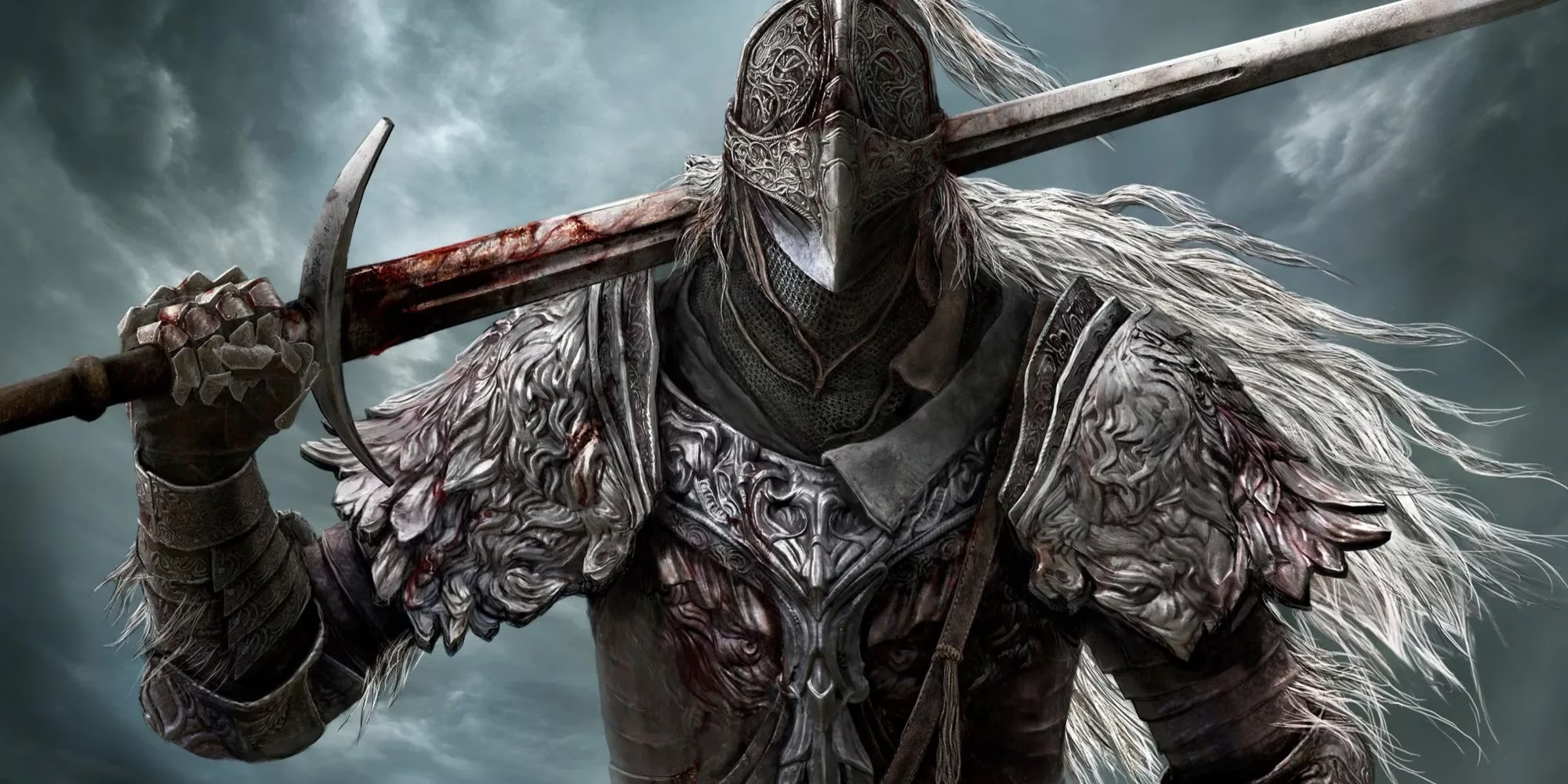
Elden Ring (2022): A sprawling open-world fantasy epic that consumed hundreds of hours from millions of players.
-
Armored Core 6 (2023): A triumphant return to complex, fast-paced mech combat with deep customization.
Developing either of these games would be a crowning achievement for a large studio. FromSoftware developed them in parallel with a core team of 300. The mind reels at the logistics. Were the modelers swapping between crafting Erdtrees and designing Coral-powered boosters on the same day? Did animators pivot from Tarnished rolls to AC quick-boosts over a coffee break? This fluidity suggests a team of incredible versatility and a company culture built on shared vision and relentless focus.
Polish Over Personnel: The FromSoftware Doctrine ✨
The result speaks for itself. Both games launched to critical and commercial acclaim, renowned for their polish and inventive design. This begs the question: does throwing more people at a problem actually solve it? FromSoftware's approach argues for precision over population. Their process seems to prioritize:
-
A Clear Vision: Every developer, regardless of which project they're on, understands the FromSoftware "feel."
-
Extreme Specialization & Flexibility: Developers are experts who can adapt their skills across genres.
-
Efficient Pipelines: Their tools and processes must be incredibly refined to avoid bottlenecks.
The Human Cost: Admiration vs. Concern 😟
While the output is admirable, the human cost is a valid concern. The gaming industry is littered with stories of crunch from studios much larger than FromSoftware working on a single title. The idea of a 300-person team split between two massive projects naturally raises eyebrows. Ogura's interview didn't delve into working conditions, leaving fans and advocates to hope that this efficiency comes from brilliant management and happy developers, not from unsustainable pressure. After all, what good is a perfectly tuned AC if the pilot is exhausted?
The Legacy Continues: What's Next for the 300? 🔮
With Armored Core 6 now successfully deployed, where does this elite cadre of developers go? The known next project is Elden Ring's Shadow of the Erdtree DLC. It's a safe bet that a significant portion of that fluid 300 has now been shifted to expand The Lands Between. But beyond that? The model suggests that pre-production on the next big thing—be it Armored Core 7, a new IP, or yes, even a Bloodborne successor (a raven can dream)—is likely already underway with a small, core team. The machine never stops; it just reassembles itself for the next mission.
A Blueprint for the Future? 📐
FromSoftware's model challenges conventional industry wisdom. In an age of ballooning budgets and thousand-person teams, they prove that a focused, versatile, and passionately unified group of 300 can outmaneuver and out-create giants. They are the definitive proof that in game development, sometimes less really is more—provided that "less" is composed of some of the most talented and driven individuals in the business. So, the next time you're marveling at the detail in a Legacy Dungeon or fine-tuning your AC's EN load, remember: it was likely crafted by a developer who, not long before, was working on something entirely different. Now that's a level of skill and coordination worthy of an S-Rank.