
Why Did The Greater Will Revive Dung Eater? Elden Ring's Most Bizarre Character Explained
Elden Ring's Dung Eater, a notorious NPC, sparks intense debate and fascination over why the Greater Will would resurrect such a chaotic figure.
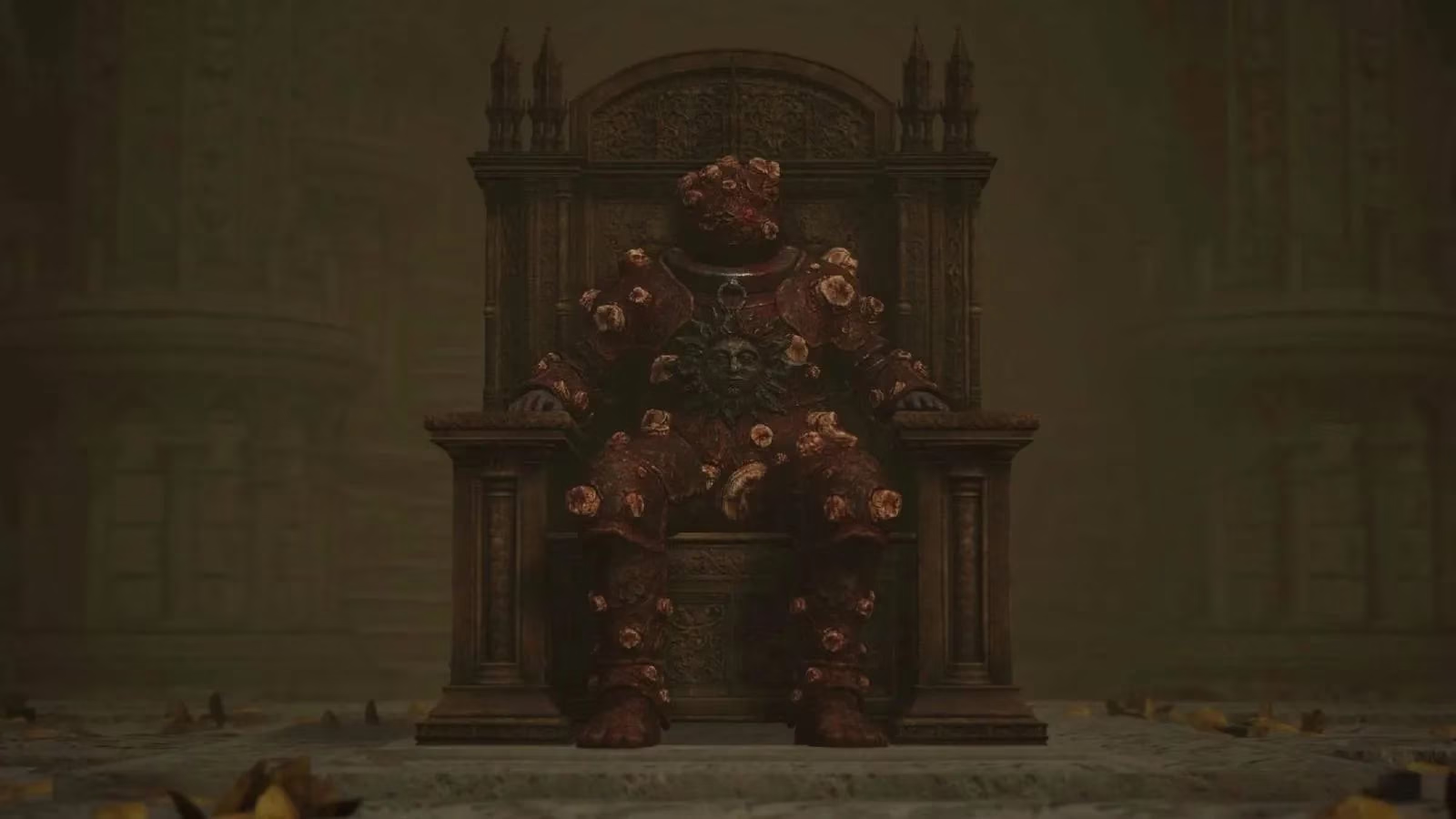
Elden Ring players have long been puzzled by one of the game's most notorious and disturbing characters: Dung Eater. Found in the Roundtable Hold surrounded by corpses, this NPC's very name sparks confusion and disgust. While the origins of his moniker remain shrouded in grim speculation, a more pressing question has emerged from the community: why in the Lands Between would the Greater Will choose to revive such a figure? A recent surge of discussion, particularly on forums like Reddit, has compared this choice to something as absurd as asking the Joker to save Gotham City. It’s a comparison that perfectly captures the sheer bewilderment surrounding this character's role in the grand scheme of the game's lore.
🤔 The Core Question: A Chaotic Choice?
The central debate isn't about what Dung Eater is—a soul-defiling, corpse-obsessed madman—but why he was deemed worthy of resurrection by the Greater Will, the enigmatic outer god guiding (or perhaps merely observing) the Lands Between. Players reason that if the goal is to restore order, selecting an agent of pure chaos and defilement seems counterintuitive. The Joker analogy resonates deeply because it highlights this perceived mismatch: you wouldn't entrust the salvation of a city to its greatest agent of anarchy. So, what gives?
⚖️ The Prevailing Theory: Order At Any Cost
Community analysis has converged on a compelling, if unsettling, explanation. The prevailing theory suggests that the Greater Will's primary concern is not morality, virtue, or justice. Its singular goal is the imposition of Order—any order. According to this view, the Greater Will is fundamentally amoral. It doesn't conduct background checks or assess the purity of one's heart. It simply seeks the strongest will, the most potent force capable of shaping the world according to some kind of rule.
-
The "Doesn't Give a Sh*t" Interpretation: As one top Reddit theory bluntly puts it, the Greater Will "doesn't give a shit" about the quality of the order, so long as there is order. Dung Eater, for all his horrors, represents a powerful, unwavering will. His proposed "Blessing of Despair" is a form of order, albeit a universally awful one. To the Greater Will, a terrible order might be preferable to the total chaos and shattering that followed the Shattering.
-
A Precedent for Extremes: This theory is bolstered by the Greater Will's other choices. It once considered making the queen of a "whacked-out mutilation cult" (likely referring to the Formless Mother and Mohg's dynasty) its avatar. This clearly shows a pattern of aligning with potent, extreme forces regardless of their methods. The selection process seems to be a brutal contest of strength and determination within the Lands Between.
👑 The Potential for Lordship
Beneath the layer of cosmic indifference lies another key point: the potential to become Elden Lord. The revival of Tarnished by the Guidance of Grace appears to be the Greater Will's method of running a brutal, open audition. It revives various individuals not for their goodness, but to see who has the sheer power and will to claim the Elden Ring and dominate the Lands Between.
Dung Eater, bizarre and repulsive as he is, demonstrably possesses this potential. His strength is undeniable, and his will is ironclad, if completely twisted. His ending proves he can impose his vision on the world. Therefore, his revival is less an endorsement and more an inclusion in a deadly tournament where the Greater Will is merely observing to see who comes out on top. The message to the Tarnished? It's not about being the hero. It's about being the strongest.
😨 The Community's Reaction & Lingering Mystery
The player base's reaction mixes fascination with horror. While the theories are logically sound within the game's bleak framework, they don't make Dung Eater any less disturbing. The idea that cosmic powers are this morally vacant is a signature theme of FromSoftware's storytelling. It reinforces the game's atmosphere of a world abandoned by benevolent gods, left to the machinations of indifferent outer forces and the mortals strong enough to wrestle with them.
Ultimately, Dung Eater's revival serves as a dark mirror to the player's own journey. It asks: In a world without clear good and evil, defined only by power and the will to impose order, how different are you from the monsters you fight? The Greater Will doesn't see a monster; it sees a contender. And in the context of 2026, as players continue to dissect Elden Ring's deep lore, Dung Eater remains one of its most potent symbols of this bleak, compelling philosophy. So, next time you see him, remember—you might just be looking at a dark reflection of what it takes to rule.